
Argentina's World Cup-winning coach Menotti dies aged 85
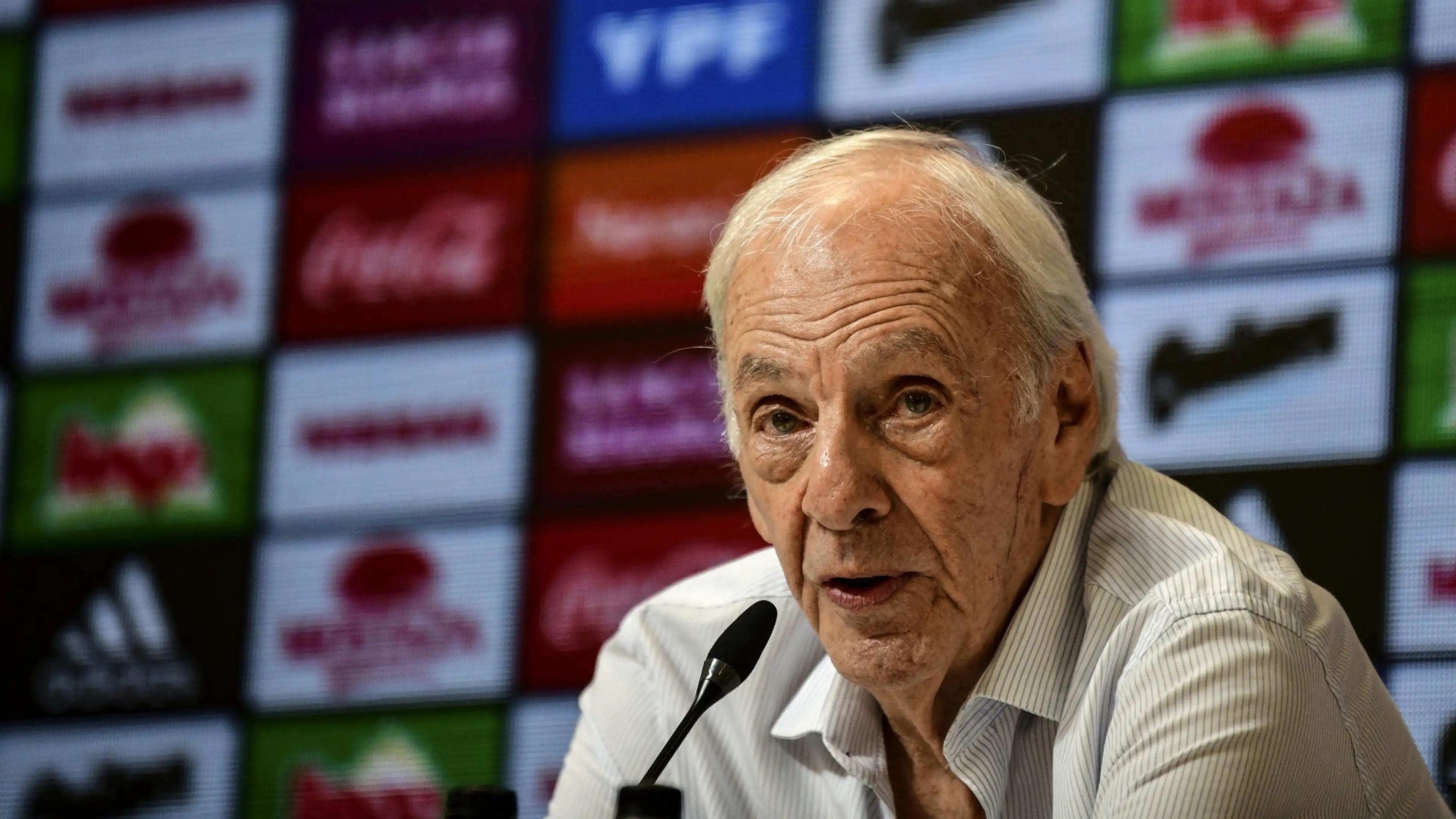
Cesar Luis Menotti, the coach who guided an impressive Argentina team to victory in the 1978 World Cup, has passed away at the age of 85, as announced by the country's football federation on Sunday.
Menotti, born in Rosario, Argentina in 1938, earned 11 caps for Argentina in the 1960s and went on to manage 11 clubs, some on multiple occasions, as well as two national teams during his coaching career spanning 37 years.
He is most notably recognized for leading Argentina to victory in the 1978 World Cup and the under-20 title the following year, as well as for his dedication to an idealistic vision of football during a period when Argentina was known for a more aggressive and violent style of play.
In the 1978 World Cup final, Argentina triumphed over the Netherlands 3-1 in extra time, with the standout player of the tournament, Mario Kempes, scoring twice against a Dutch team missing Johan Cruyff, who had opted out of participating in the competition.
The victory was achieved with style but was met with controversy. Many believed that Argentina's repressive junta made it an inappropriate choice to host the event.
Menotti also made the decision not to select 17-year-old sensation Diego Maradona, who had recently made his debut for the national team.
During the second group phase, Argentina began their final match shortly after Brazil's win over Poland, knowing that they needed to defeat Peru by at least three goals to advance to the final.
They emerged victorious with a 6-0 scoreline, with Kempes and Leopoldo Luque each scoring twice. Despite their impressive performance, suspicions have long surrounded this victory.
Menotti, affectionately known as the "Thin One," made a memorable presence on the sidelines, smoking and gazing stoically from beneath his shaggy hair.
"I never go to the barber. I cut my own hair," he stated.
Despite losing his father to cancer at the age of 16, Menotti also became a heavy smoker. He referred to it as his "friend in loneliness." However, he quit smoking after undergoing a lung operation in 2011.
In 1979, with Maradona on the team, Menotti led Argentina to victory in the under-20 World Cup, defeating the Soviet Union 3-1 in the final.
His tenure as coach ended after the 1982 World Cup in Spain, which coincided with Argentina's surrender in the Falklands War. Argentina was eliminated by Brazil with a 3-1 defeat in the second round, which resulted in Maradona being sent off.
Menotti achieved success by winning two cups in two seasons with Barcelona, marking the final triumphs of his coaching career that took him to Italy, Mexico, Uruguay, and back to Argentina.
He maintained a lifelong feud with coaches who adhered to the more pragmatic Argentine tradition and believed that football styles are inherently political.
During an interview with German magazine Kicker in 2006, he expressed that left-wing football is characterized by its generosity and dedication to the public. He emphasized that it is a sincere approach that prioritizes the game itself rather than solely focusing on the outcome.
Menotti, initially a supporter of Rosario Central, began his professional football career with the club. He later transferred to Boca Juniors, where he achieved an Argentine title.
Following his time at Boca Juniors, he played for the New York Generals before joining Santos in Brazil, where he had the opportunity to play alongside the legendary Pele.
After retiring as a player, Menotti took on the role of an assistant coach at Newell's Old Boys, a rival club of Rosario Central. In 1973, he led Huracan to their first league title since 1928.
Subsequently, he became the national team manager in 1974 and despite his affiliation with the Communist Party, he remained in his position even after the military took control in 1976.
In a 2018 interview with Argentine sports magazine El Grafico, Menotti expressed his belief that it is more effective to bring about change from within rather than from the outside.
Chris John