
Brazil named hosts of 2027 Women's World Cup at FIFA Congress
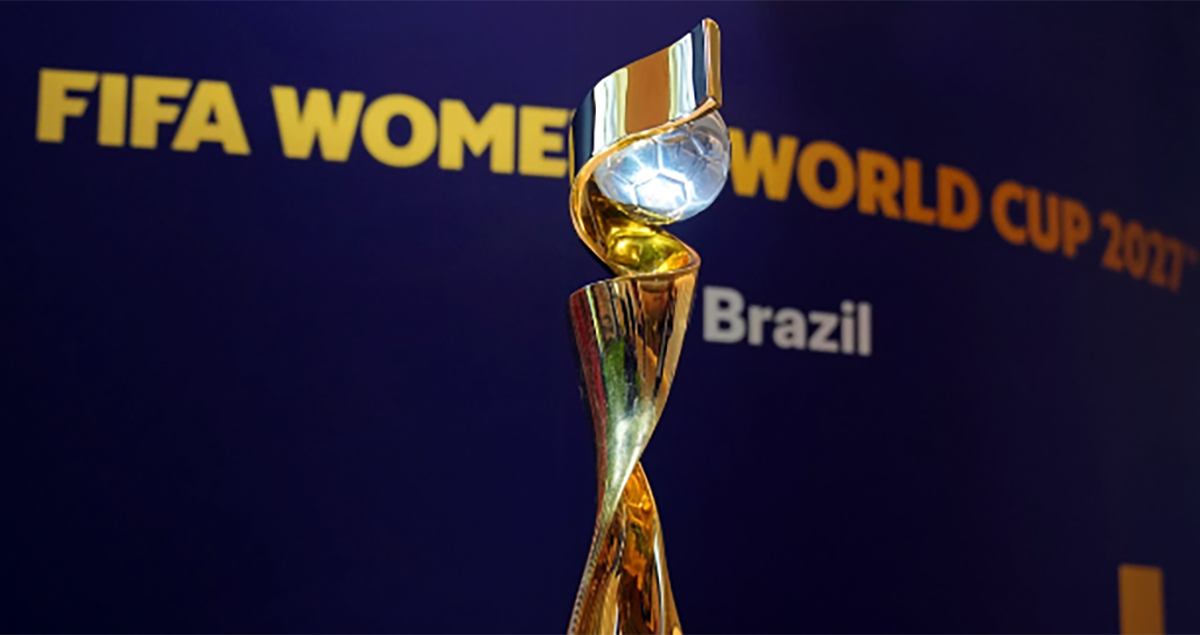
Brazil was declared host of the 2027 Women's World Cup after winning a vote at the annual FIFA Congress on Friday, defeating Belgium, the Netherlands, and Germany to become the first South American country to host the tournament.
Brazil won the joint European entry with 119 votes to 78, thanks to a high score from FIFA's technical evaluation of its commercial plan and stadiums built specifically for the 2014 Men's World Cup.
"We knew we would be celebrating a victory for South American women's soccer and for women," said Ednaldo Rodrigues, president of the Brazilian Football Confederation.
"You can be sure, with no vanity, we will accomplish the best World Cup for women."
FIFA's Congress in Bangkok heard a call from all members to implement mandatory sanctions to combat racist abuse.
There was also a Palestinian proposal to suspend the Israel Football Association (IFA), accusing it of multiple violations of FIFA statutes, including the Gaza war and the inclusion of Palestinian-based teams in Israel's leagues.
According to Gaza health officials, since an Oct. 7 cross-border raid by Hamas-led gunmen that Israel claims killed more than 1,200 people, the offensive in Gaza has killed more than 35,000 Palestinians.
FIFA President Gianni Infantino stated that an urgent legal assessment of the Palestinian allegations would be conducted, and the FIFA Council would hold an extraordinary Congress in late July to address the issue.
He expressed shock at both the October 7 attack and the devastation in Gaza, saying, "I pray for all those people who suffer unimaginably."
Jibril Rajoub, president of the Palestinian Football Association (PFA), accused the IFA of racism and discrimination in a proposal alleging complicity in the failure to condemn the Gaza operations. The IFA rejected it.
"FIFA cannot afford to remain indifferent to these violations or the ongoing genocide in Palestine," Rajoub told the Congress. "I ask you to stand on the right side of history... If not now, when?"
Israeli counterpart Shino Moshe Zuares claimed the proposal had nothing to do with football and that the IFA had broken no rules.
"Once again, we are facing a cynical political and hostile attempt by the PFA to harm Israel," he said.
"I am holding myself back ... in the hope things can be better for the game for those who play in Israel, the Palestinian authority, or those who play all over the world."
The vote for the Women's World Cup had been reduced to two candidates after the United States and Mexico withdrew to focus on the 2031 tournament instead.
Brazil received a score of 4.0 out of 5 in the FIFA evaluation, compared to 3.7 for Belgium-Netherlands-Germany, which emphasised the European bid's compactness, solid commercial viability, and short distances between venues while noting the smaller capacities of its 13 stadiums.
Brazil football chief Rodrigues stated that the victory was the result of conviction, not lobbying.
"We were not campaigning, asking for votes. We were working to give FIFA what it needed," he said.
The bid's operational manager, Valesca Araujo, stated that the goal was to promote women's football in South America, which was underdeveloped but had enormous potential.
"The concept we presented went beyond a sports tournament. We worked for a transformation," she said.
"Now we have to celebrate. It's a great achievement for South America."
FIFA vowed to be tough on racism, calling on all members to implement strict measures against instances of abuse, including forfeiture of matches and the inclusion of racism as an offence in players' disciplinary codes.
It advocates for the suspension or abandonment of games, as well as the implementation of a global standard gesture for players to notify referees of racist abuse.
"If it is a problem of society and society can't deal with it, let's deal with it in football once and for all," Infantino said.
Infantino also commented on what he called a "futile debate" over the number of matches played worldwide, claiming FIFA organised only about 1% of club games and 1% to 2% of national team matches.
He reminded delegates that most FIFA members "would have no football without the resources" that FIFA provides.
"I hope these figures will show that we should probably stop this futile debate, it's really pointless, and focus on what we need to do," he said.

SportsLigue