
Federica Brignone wins Second Gold in Olympic Giant Slalom
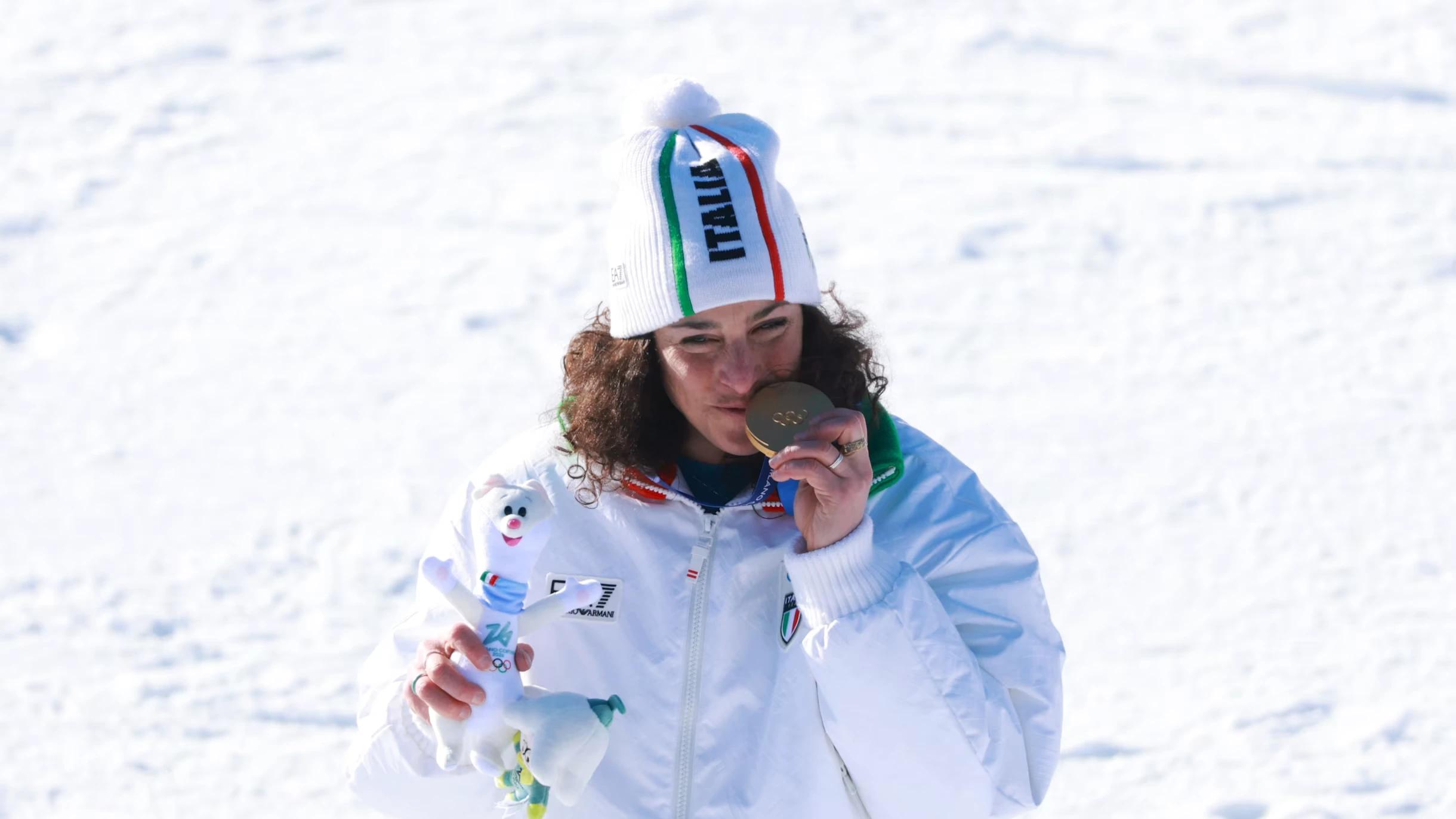
Italian skiing icon Federica Brignone delivered a performance for the ages, securing her second gold medal of the Milano Cortina 2026 Winter Olympics with victory in the women’s giant slalom.
Competing on home snow at the iconic Tofane Alpine Skiing Centre, Brignone posted a combined time of 2:13.50 across two commanding runs, cementing her status as the defining Alpine figure of these Games. The triumph followed her earlier super-G success, making her the first Italian woman in nearly three decades to claim Olympic giant slalom gold.
But this story transcends medals and timesheets, it is a story of resilience, surgical recovery, and mental fortitude.
From Devastating Injury to Olympic Glory
Less than a year before her Olympic double, Brignone suffered a catastrophic knee injury at the Italian Championships. The damage included multiple leg fractures, a fractured tibial plateau, and a complete knee dislocation involving both ligaments and menisci. The prognosis suggested a recovery timeline stretching beyond two years—an eternity in elite sport.
There were months when walking unaided was a victory in itself. Surgical screws stabilized the fractures. Rehabilitation demanded painstaking patience. For an athlete who had built her legacy on balance, edge control, and technical precision, the path back seemed uncertain.
Yet in Cortina, she skied as if uninterrupted by hardship.
The giant slalom layout in Cortina tested rhythm and bravery in equal measure. The upper section required disciplined line selection, while the lower terrain punished hesitation. Brignone attacked from the outset.
After the first run, she led by 0.34 seconds, skiing with fluid transitions and minimal wasted movement. Where rivals braked slightly into steep gates, she trusted her edges and carried speed. Her second run mirrored the first—calculated aggression, technical cleanliness, and supreme composure under the weight of expectation.
The home crowd’s roar echoed through the Dolomites as she crossed the line. When her time held, the magnitude of her achievement became clear. She became the first female Alpine skier from any nation to win two gold medals at a single Winter Olympics since Tina Maze accomplished the feat at the Sochi 2014 Winter Olympics.
A Rare Shared Silver Medal
Behind Brignone, the battle for silver produced an extraordinary statistical rarity. Sweden’s Sara Hector and Norway’s Thea Louise Stjernesund delivered identical times across both runs, finishing 0.62 seconds behind the Italian and sharing second place.
For Hector, the reigning Olympic giant slalom champion from Beijing 2022, the result reinforced her consistency at the sport’s highest level. Stjernesund, meanwhile, secured the most significant Olympic podium of her career, underscoring Scandinavia’s continued strength in technical disciplines.
Their spontaneous gesture of kneeling in respect toward Brignone at the finish area symbolized the admiration her comeback commanded across the field.
Mikaela Shiffrin falls short of the Podium
Pre-race attention also focused on American superstar Mikaela Shiffrin, a former Olympic giant slalom champion and one of the most decorated skiers in history.
However, the Cortina course proved unforgiving. Sitting seventh after the opening run—1.02 seconds off the pace—Shiffrin pushed in her second attempt but ultimately finished 11th. Despite flashes of trademark precision, she could not replicate Brignone’s rhythm or acceleration through the transitions.
Shiffrin now shifts focus to the slalom, historically her strongest event, where redemption remains firmly within reach.
North American Performances: Encouragement Amid Challenges
The United States saw three of four starters advance to the second run. Paula Moltzan and Nina O’Brien displayed aggressive skiing but fell short of the top 10, while AJ Hurt did not finish.
Canada’s Valerie Grenier produced a composed performance to secure eighth place, finishing just 0.01 seconds behind Shiffrin. Olympic debutants Britt Richardson and Justine Lamontagne gained valuable experience, while Cassidy Gray showed promising pace before failing to complete her run.
A Historic Moment for Italian Alpine Skiing
Brignone’s victory carries historical weight. She is the first Italian woman to win Olympic giant slalom gold since the Nagano 1998 Games, marking a generational milestone for the nation’s Alpine program.
At 35, she also redefines longevity in elite skiing. While Alpine careers often peak earlier, Brignone has combined experience, tactical maturity, and physical resilience to produce arguably the finest form of her career on the sport’s biggest stage. Her double gold at Milano Cortina 2026 will likely stand among the most iconic chapters in Italian winter sports history.
The Legacy of Cortina 2026
The women’s giant slalom at Milano Cortina 2026 delivered everything the Olympics promise, technical brilliance, emotional storytelling, shared respect among rivals, and the coronation of a home champion.
For Federica Brignone, it is more than a medal. It is proof that recovery is possible, doubt can be overcome, and that sometimes sport writes scripts more compelling than fiction.
As the Olympic flame continues to burn across Italy, one image will endure: Brignone, arms raised against the backdrop of the Dolomites, completing a comeback few believed possible.

SportsLigue