
Fernando Valenzuela, the Mexican pitcher who sparked 'Fernandomania' with his incredible performances for the Los Angeles Dodgers, has died at 63
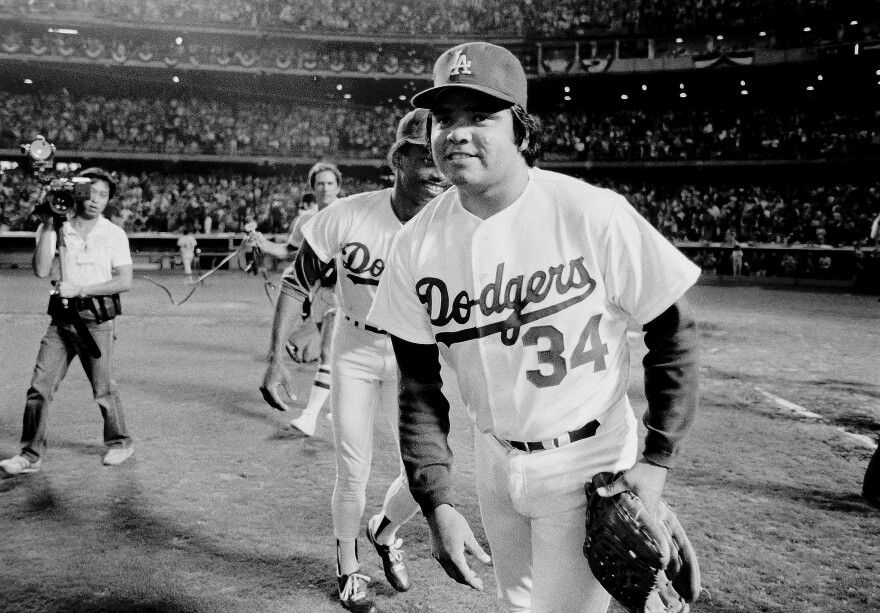
Fernando Valenzuela, the remarkable Mexican-born pitcher for the Los Angeles Dodgers who ignited “Fernandomania” and earned both the NL Cy Young Award and Rookie of the Year honors in 1981, has passed away at the age of 63.
The Dodgers announced that he died on Tuesday night at a hospital in Los Angeles, although they did not disclose the cause of death or any additional information.
His passing occurs just as the Dodgers are set to commence the World Series on Friday evening at home against the New York Yankees. Baseball Commissioner Rob Manfred stated that Valenzuela will be commemorated during the series at Dodger Stadium.
Valenzuela had stepped down from his role as a color commentator for the Dodgers’ Spanish-language television broadcasts in September without providing a reason. Reports indicated that he had been hospitalized earlier this month. His position allowed him to frequently visit Dodger Stadium, where he was a familiar presence in the press box dining area before games and remained a beloved figure among fans who sought his photographs and autographs.
“God bless Fernando Valenzuela!” expressed actor and Dodgers supporter Danny Trejo on X.
Valenzuela was among the most formidable players of his time and enjoyed immense popularity during the 1980s, despite not being inducted into the Baseball Hall of Fame. Nevertheless, he is represented in Cooperstown, which houses several artifacts, including a signed baseball from his no-hitter in 1990.
Stan Kasten, the team president and CEO, remarked in a statement, “He is among the most significant figures in Dodgers history and deserves a place on the Mount Rushmore of franchise legends.
He inspired the fan base during the remarkable Fernandomania season of 1981 and has held a special place in our hearts ever since, not only as a player but also as a broadcaster. His departure is a profound loss for us all.”
Valenzuela's journey from modest origins as the youngest of twelve siblings in Mexico, coupled with his remarkable achievements on the field, made him a beloved and influential figure within Los Angeles' Latino community, while also drawing new fans to Major League Baseball. His popularity endured long after his retirement.
“63 is far too young.... A piece of my childhood has vanished,” stated actor and “Access Hollywood” co-host Mario Lopez on X. “As a Mexican child, one of the primary reasons I became a Dodgers fan was because of Fernando. ... He was not only an exceptional player but also a remarkable individual in the community. What a legend.”
Eva Torres, who hails from Mexico City, traveled from Anaheim to view murals of Valenzuela on Sunset Boulevard near Dodgers Stadium.
“I wasn’t a baseball fan, but I am a fan of him,” she expressed. “He represents someone like me, an immigrant who came here to achieve great things.”
In 1981, Valenzuela was named the Dodgers’ opening day starter as a rookie after Jerry Reuss sustained an injury just a day before his scheduled start. He delivered a shutout against the Houston Astros, winning 2-0, and began the season with an impressive 8-0 record, including five shutouts and an ERA of 0.50. He made history as the first player to secure both the Cy Young Award and Rookie of the Year honors in the same season.
His extraordinary performances sparked the phenomenon known as “Fernandomania” among Dodgers supporters, with the ABBA song “Fernando” playing as he warmed up on the mound.
“Fernando Valenzuela was a genuine icon of the Dodgers and the sport itself,” Representative Jimmy Gomez, D-Calif., shared on X. “His legacy and bond with the Latino community in Los Angeles are among the reasons I fell in love with the Dodgers.”
Valenzuela concluded his inaugural season with a record of 13 wins and 7 losses, accompanied by a 2.48 earned run average, despite the season being curtailed due to a players' strike.
From 1981 to 1986, he was selected as an All-Star each year, amassing a total of 97 victories, 84 complete games, 1,258 strikeouts, and a 2.97 ERA during that span. In the postseason, he achieved a record of 5 wins and 1 loss with a 2.00 ERA across eight starts. His accolades include two Silver Slugger Awards and a Gold Glove.
A significant highlight of Valenzuela's career occurred on June 29, 1990, when he pitched a no-hitter against the St. Louis Cardinals, leading to a 6-0 victory at Dodger Stadium. He recorded seven strikeouts and issued three walks during this game. Hall of Fame broadcaster Vin Scully famously remarked, “If you have a sombrero, throw it to the sky!” during the broadcast.
Affectionately known as “El Toro” by fans, Valenzuela was distinguished by his unique pitching style, which featured a glance skyward at the peak of his windup. His pitching arsenal included a screwball, a rarity among pitchers of his time, which he learned from teammate Bobby Castillo, as the Dodgers sought to enhance Valenzuela's repertoire, given that he was not recognized for his velocity.
In the early stages of his career with the Dodgers, Valenzuela faced language barriers, as he spoke limited English, complicating communication with his catchers. Rookie Mike Scioscia took the initiative to learn Spanish, becoming Valenzuela’s personal catcher before assuming the role of the team's primary catcher.
Valenzuela demonstrated above-average hitting skills, accumulating 10 home runs throughout his career.
Unfortunately, persistent shoulder issues hindered his pitching performance, preventing him from participating in the 1988 postseason when the Dodgers clinched the World Series title.
The team released Valenzuela just prior to the 1991 season. He subsequently played for the California Angels, Baltimore Orioles, Philadelphia Phillies, San Diego Padres, and St. Louis Cardinals.
He retired in 1997 with a career record of 173 wins and 153 losses, alongside a 3.54 ERA over 17 seasons, making him the all-time major league leader in wins and strikeouts (2,074) among Mexican-born players.
Valenzuela's journey from the small town of Etchohuaquila in Sonora, Mexico, to achieving stardom in the United States is remarkable. As the youngest child in a large family, he often accompanied his older brothers to baseball games.
At the age of 16, he signed his first professional contract and quickly began to excel against older competitors in the Mexican Central League.
In 1978, renowned Dodgers scout Mike Brito was in Mexico scouting a shortstop when Valenzuela took the mound as a reliever. His performance immediately caught Brito's eye, leading to Valenzuela signing with the Dodgers at the age of 18 in 1979. He was assigned to the California League that same year.
In September 1980, Valenzuela was promoted to the Dodgers and made his major league debut as a reliever.
He is the only pitcher in Major League Baseball history to win both the Cy Young Award and the Rookie of the Year Award in the same season. In 1981, he was the starting pitcher for the National League in the All-Star Game, the same year the Dodgers clinched the World Series title.
Throughout his career, he graced the cover of Sports Illustrated and had the honor of visiting the White House.
In 2003, Valenzuela returned to the Dodgers as a Spanish-language radio color commentator for National League games. Twelve years later, he transitioned to the role of color commentator for the team's Spanish-language television broadcasts.
“He consistently supported the growth of the game through the World Baseball Classic and at MLB events across his home country,” stated Manfred. “As a member of the Dodger broadcasting team for over 20 years, Fernando helped engage a new generation of fans and foster their passion for the sport. Fernando will always be a cherished figure in Dodger history and a source of pride for the millions of Latino fans he inspired.”
He was inducted into the Mexican Professional Baseball Hall of Fame in 2014. Five years later, the Mexican League honored Valenzuela by retiring his No. 34 jersey. The Dodgers followed suit in 2023, having kept his number out of circulation since his last appearance with the team in 1991.
Chris John