
Full-back MacNeill believes work still to do despite Ireland's Six Nations triumph
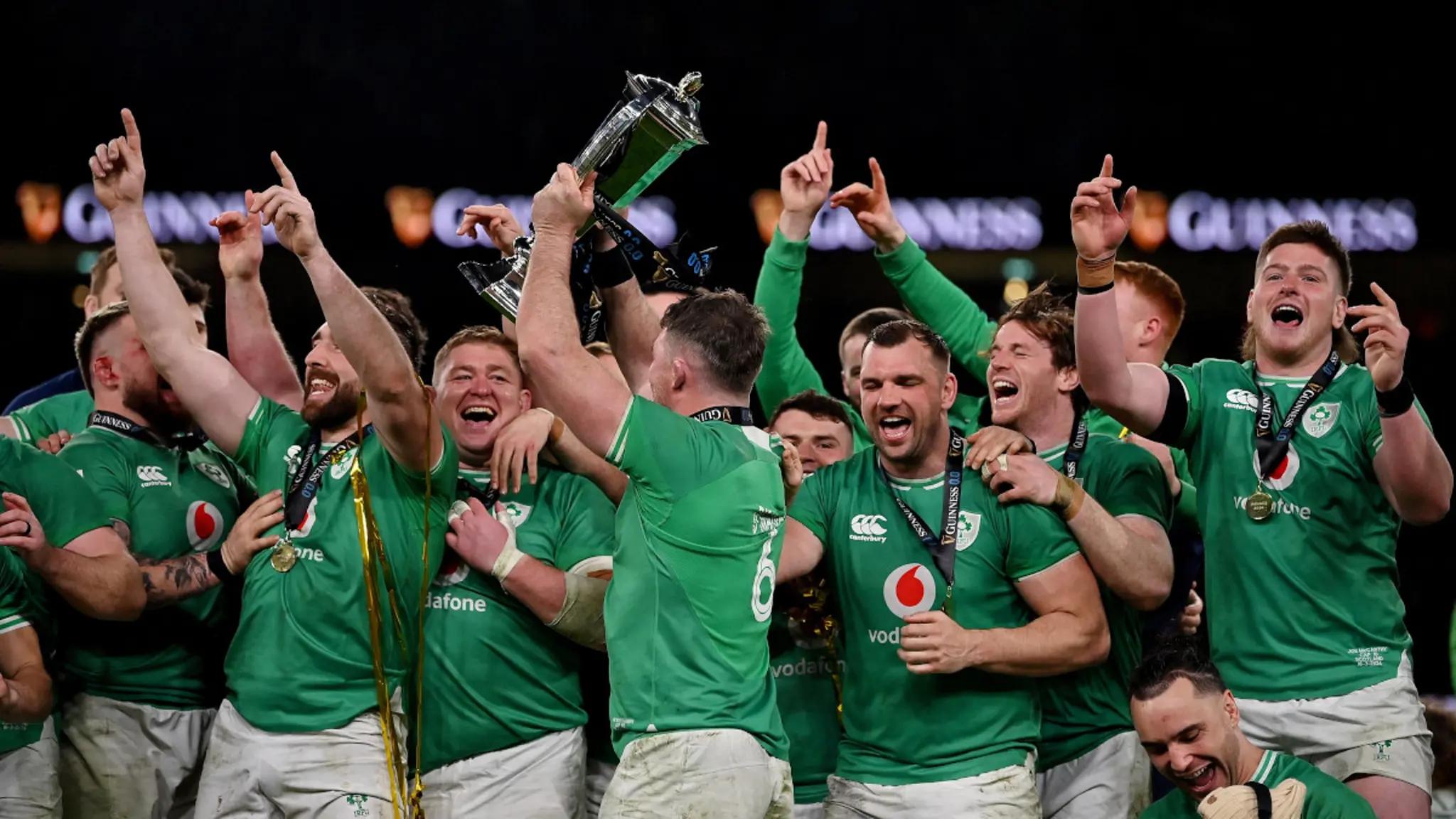
Ireland were crowned champions of the Six Nations, a title they rightfully earned. Nevertheless, their recent subpar showings serve as a reminder that they are a team that is still a work in progress, as noted by former Ireland full-back Hugo MacNeill.
The Irish team delivered a determined performance in their 17-13 victory over Scotland in Dublin on Saturday, successfully defending their title and following in the footsteps of Joe Schmidt's team in the 2014/15 season.
However, this was their second consecutive match where they failed to perform at their best, a significant contrast to their impressive 38-17 win against France in the opening game.
Nonetheless, they displayed resilience by bouncing back from their narrow 23-22 loss to England the previous Saturday, which dashed their hopes of achieving back-to-back Grand Slams.
"Deserved winners," MacNeill commented to AFP over the phone on Sunday.
The team is still in the process of development. They possess a strong lineout and quick rucks when functioning properly. However, the backline is yet to reach its full potential.
Jamison Gibson-Park sets an excellent tempo, Jack Crowley is finding his rhythm, and Bundee Aki has become a more influential player.
Nevertheless, there were few instances of sharp and cohesive backline movements.
MacNeill, a prominent member of the Ireland Triple Crown-winning teams in 1982/85, commended Farrell for his ability to move the Irish team forward after their devastating loss to New Zealand in the Rugby World Cup quarter-finals.
However, the 65-year-old emphasized the importance of considering the quality of the opposition they faced in the first three matches.
"It is crucial to take into account the level of competition they encountered. Wales (31-7) performed poorly, while both France and Italy (36-0) were weak opponents."
MacNeill acknowledged that there is still work to be done despite the team's progress. He believes that the decline in performance against England and Scotland can be attributed to their mindset.
"When everyone tells you that you won't lose, it creates a sense of complacency and diminishes the level of performance," he explained.
"This lack of intensity was evident in both matches, and it resulted in the Irish team being caught off guard. Once you enter a game with that mindset, it becomes difficult to change."
MacNeill expressed confidence in the Irish coaching staff, stating that Farrell's absence during the next Six Nations due to his role as head coach of the Lions will not significantly impact the team.
However, he expressed concern about finding a suitable replacement for Peter O'Mahony as captain.
Regarding O'Mahony's future, MacNeill believes that his post-match press conference indicated that it may have been his final appearance for the national team.
"I think that was the last we will see of him," MacNeill remarked. "His body language suggested so."
MacNeill supported the decision to appoint Johnny Sexton as captain after his predecessor stepped down, as there was a lack of leadership within the team.
He noted that neither James Ryan nor Garry Ringrose, who serve as co-captains for Leinster, were included in the Ireland team for various reasons.
MacNeill mentioned that while the captaincy position is still vacant, Caelan Doris needs to work on improving his game after two lackluster performances. Despite this, the gap left by Sexton at fly-half has been successfully filled by Crowley.
MacNeill highlighted the seamless transition between the two players and expressed optimism for the future.
He believes that Irish rugby is in a strong position, especially after winning a championship and narrowly missing out on a Grand Slam.
Looking ahead to the two-Test series against South Africa in July, MacNeill emphasized the importance of the players taking a well-deserved break before the upcoming challenges.
Chris John