
History of Monument Park: Where legends live at New York Yankees Stadium
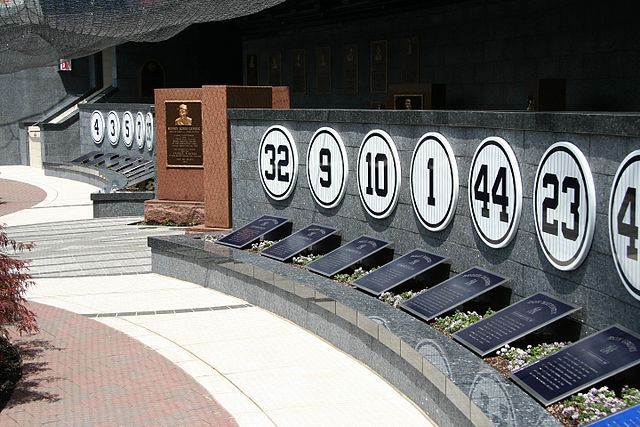
From a lone memorial to Miller Huggins in 1932 to a living museum of retired numbers and plaques, Monument Park has grown into the emotional center of Yankee Stadium, a place where baseball history is preserved and celebrated.
The Origins: A Monument in Deep Center Field
The story of Monument Park begins not as a park, but as a single tribute placed in deep center field at the original Yankee Stadium. On May 30, 1932, the Yankees dedicated a monument to their late manager Miller Huggins. Positioned roughly 460 feet from home plate, the stone marker stood alone on the field of play. It was both a memorial and a bold statement: the Yankees would honor their own in permanent form.
Huggins had guided the franchise to its first three World Series titles and six American League pennants. His leadership, including his famous handling of Babe Ruth, helped shape the Yankees’ early dynasty. When Huggins passed away in 1929, the organization chose to commemorate him in a way rarely seen in professional sports at the time.
Ruth, Gehrig and the Growing Shrine
Over the next two decades, that solitary monument evolved into something larger. In 1941, a memorial to Lou Gehrig was added following his tragic death from ALS. Eight years later, in 1949, Ruth joined them. Three giants of the game now stood in deep center field.
Related Article: New York Yankees to retire CC Sabathia’s No. 52, honor Hall of Famer in Monument Park
These monuments were not tucked away. They sat on the playing field itself, near a flagpole, creating a unique hazard for outfielders chasing long drives. Visiting players often described the area as intimidating. But for fans, it was sacred ground.
After games, spectators were once allowed onto the field and would gather around the monuments to pay their respects. It was baseball history you could physically walk up to and touch.
The 1970s Renovation and the Birth of Monument Park
By the early 1970s, the original Yankee Stadium was deteriorating. Structural issues forced major renovations, and the city of New York acquired the stadium through eminent domain. Under new ownership led by George Steinbrenner, the ballpark closed after the 1973 season for a sweeping overhaul.
When the stadium reopened in 1976, the field dimensions had changed. “Death Valley” in left-center was shortened, and the monuments were relocated behind the outfield wall.
For the first time, the memorial area had a defined identity. It was now officially called Monument Park. The move cleared the field of play and created a dedicated space beyond the fence, no longer an obstacle for outfielders, but a destination for fans.
Related Article: Ohtani and Judge unanimously crowned Major League Baseball MVPs
A Living Museum of Yankees Greatness
Over the years, Monument Park expanded far beyond its original three monuments. Today, it includes:
- More than three dozen plaques
- 21 retired numbers representing 22 Yankees legends
- Seven full monuments
Legends from every era are represented, from Joe DiMaggio and Mickey Mantle to modern icons like Derek Jeter, Mariano Rivera, Andy Pettitte and Jorge Posada. Each plaque tells a story. Each number represents a career that shaped not just the franchise, but the sport itself.
Former players often describe the moment of seeing their plaque unveiled as surreal. Being immortalized in Monument Park means becoming part of Yankees mythology.
From Original Stadium to the Modern Era
When the new Yankee Stadium opened in 2009, Monument Park made the journey across the street. The monuments, each weighing several tons, were carefully removed, preserved and installed in a redesigned plaza built with 125 tons of imported blue pearl granite.
The new layout allows fans to see Monument Park from the stands and provides greater space for visitors. Two circular spaces embedded in the design are widely believed to be placeholders for future monuments. The implication is clear: the story isn’t finished.
A Cultural Landmark Beyond Baseball
Monument Park is more than a tribute site. It is a living archive of American sports history. Generations experience it differently. Older fans pause quietly at Mantle’s monument. Younger visitors gather around the retired numbers of the late-1990s Core Four.
Tour guides often say you can tell someone’s era by where they linger first. Unlike statues outside other ballparks, Monument Park feels enclosed, intimate and uniquely Yankees. It carries an atmosphere that blends reverence with pride.
Why Monument Park Endures
Few franchises in professional sports possess the sustained excellence required to fill a space like Monument Park. Its existence reflects decades of championships, larger-than-life personalities and defining moments.
From a single stone honoring Miller Huggins in 1932 to a granite-lined gallery of baseball immortals, Monument Park has evolved into the spiritual heart of Yankee Stadium. It remains, as many describe it, where legends live, and where history continues to grow.

SportsLigue