
Inside Barcelona’s Camp Nou: Why the delays continue, what it means and when fans might return
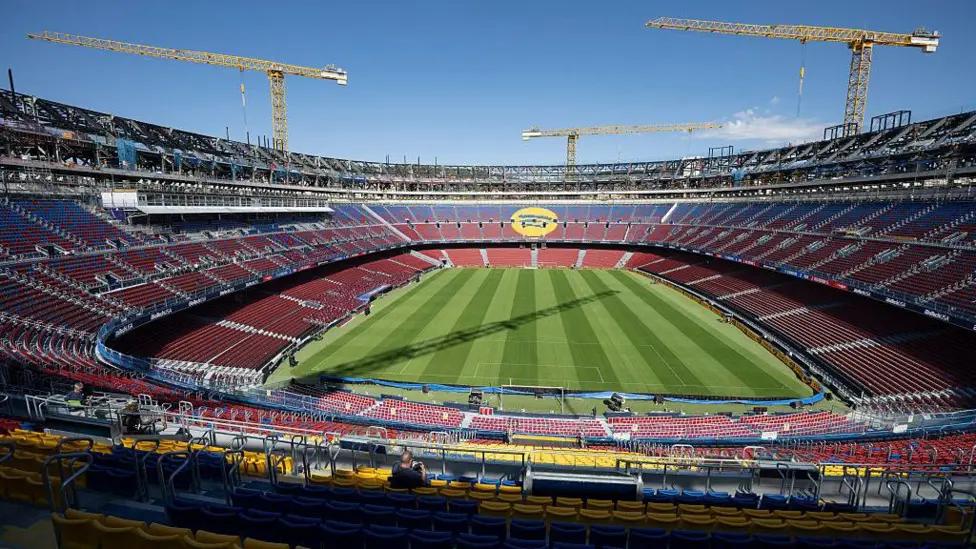
When Barcelona closed the doors of the iconic Camp Nou in May 2023, the plan was simple: return in November 2024 with a rebuilt stadium ready to host the club’s 125th anniversary in style. Fast forward almost two years, and the dream has turned into chaos. The stadium remains closed, deadlines have been missed, and fans have been left frustrated as the saga of the Camp Nou redevelopment drags on.
A Delayed Grand Reopening
The original timeline gave Barcelona a year and a half to complete major renovations. But the November 2024 reopening date came and went. New targets in spring 2025 and again in August 2025 were also missed. To make matters worse, La Liga scheduled Barca’s first three fixtures away from home to help buy more time, but the club still wasn’t ready.
The result was farcical. Instead of returning to their famous home, Barcelona were forced to stage their first two “home” matches of the season at the Johan Cruyff Stadium, a training ground with just 6,000 seats. That decision cost the club more than €4 million in lost revenue.
Safety First: City Council Intervention
This week brought another blow. Barcelona city council delayed granting a permit to reopen Camp Nou, even at a reduced 27,000 capacity. The reason? Problems with evacuation routes.
“The city council must guarantee the safety of everyone who wants to go to the stadium — this is the priority,” said the mayor’s deputy.
For now, Barcelona will use the Olympic Stadium for their La Liga clash against Real Sociedad and the Champions League showdown with PSG. Club president Joan Laporta is still optimistic that Camp Nou can host Girona on October 18, but nothing is certain.
Why has Camp Nou not reopened? (the permit and safety problem)
The immediate roadblock is administrative and safety-related: Barcelona do not yet have the final construction permit from the city council to open Camp Nou — even at a reduced capacity. Local authorities say evacuation routes and related safety measures must be fully compliant before a licence is granted, and they have refused to rush that decision.
Put simply: the city council’s priority is public safety. Even if much of the bowl looks match-ready from the stands, evacuation and emergency circulation standards are non-negotiable for municipal authorities. That’s what is keeping gates closed.
How the rebuild ran off course - timeline and compounding issues
A chain of technical problems and external pressures turned a tightly scheduled rebuild into a long, expensive affair:
- Design and preservation complexity: Camp Nou’s two restored lower tiers required far more bespoke work than planners expected — reportedly over 2,000 additional modifications compared with initial projections.
- On-site setbacks: Flooding forced at least two dressing rooms to be rebuilt twice. That kind of rework is time-consuming and costly.
- Community and logistics constraints: Neighbour objections led to stricter working hours to limit noise and light pollution, slowing progress.
- Global supply factors: Material prices rose in the post-pandemic economy and following geopolitical shocks such as Russia’s invasion of Ukraine — adding further cost and delay.
- Scope creep: The project grew beyond a cosmetic facelift into a full modernization: expanded capacity, a new roof lift, enhanced VIP areas and dozens of previously unplanned technical interventions.
The final bill is now projected at €1.5 billion ($1.75 billion). For a financially fragile Barcelona, every delay adds more pressure to get the stadium generating revenue.
What’s Finished and What’s Not
When seen from the pitch and stands, Camp Nou looks dramatically transformed. The new bowl is more spacious, spectators will find upgraded seating, and the club says evacuation times will halve (from eight minutes to around four-and-a-half at full capacity). Capacity is being raised from about 99,000 to 105,000, which would make Camp Nou the only European stadium to hold over 100,000 fans.
But critical interior works remain incomplete: the first-team changing room is not finished; two visiting dressing rooms show exposed pipes and unfinished paintwork; and essential safety fixtures and evacuation access points require finishing touches before a licence can be granted.
Most notably, the marquee roof project — the “big lift” — is not due until summer 2027, meaning the stadium will open without its final structural crown for at least another season.
The Spotify Dilemma
Barcelona’s naming-rights deal with Spotify, worth €70 million a season, could also be under threat. Reports in Spain suggest the club will earn less if the stadium isn’t operating at 90% capacity by the end of the season. Given the current state of affairs, that risk looks very real.
Recommended: FC Barcelona and Spotify seal a strategic long-term partnership in sports and entertainment
When might Camp Nou finally reopen?
There is no single fixed date yet. Club sources hope for staggered re-entry: limited capacity opening for select fixtures, then progressive increases as outstanding work is signed off. Public projections mentioned a target date around mid-October for a small-capacity return, but the municipal permit remains the deciding factor.
Realistically, given the outstanding safety checks and finishing work — plus the roof lift scheduled for 2027 — a fully finished Camp Nou at 105,000 capacity is unlikely before 2027. Partial re-opening for matches could come sooner if the council signs off on the required safety measures.
What needs to happen next
- Barcelona must satisfy the city council on evacuation routes and emergency access.
- Interior work; changing rooms, service corridors and technical installations — requires completion and inspection.
- Final certification (the construction and occupancy permits) must be formally issued.
- The club should publish a clearer, realistic timeline for supporters to restore trust and manage ticketing.
Camp Nou’s rebirth remains a work in progress, a high-ambition project hampered by technical surprises, local constraints and macroeconomic pressures. For Barcelona the stakes are more than symbolic: reopening the stadium is central to the club’s financial recovery and matchday identity. Fans want to be home; the council wants to guarantee safety; and Barca need certainty to stabilise finances.
Until the city signs off, Barcelona will continue juggling temporary venues, lost revenue and mounting impatience, and Camp Nou’s long-awaited curtain-raiser will remain firmly on hold.

SportsLigue