
Kirsty Coventry elected as President of the International Olympic Committee
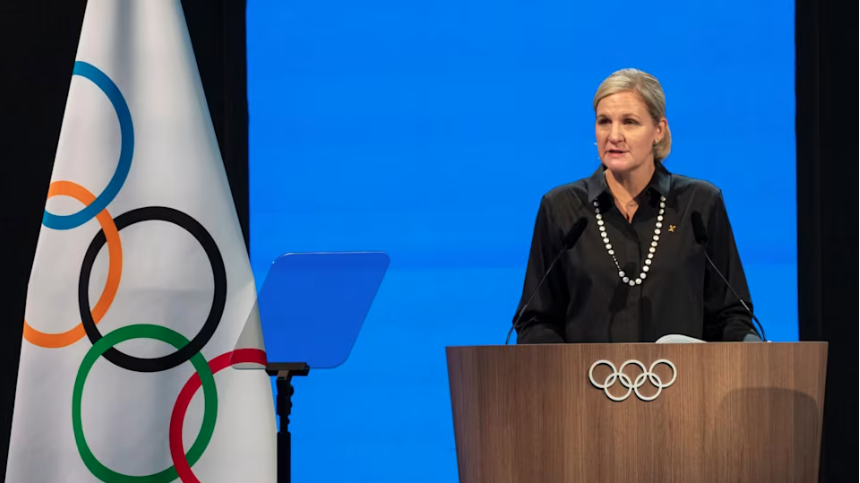
In a groundbreaking moment for global sports governance, Kirsty Coventry has been elected as the 10th President of the International Olympic Committee (IOC), making history as the first woman and African to assume the role. The 41-year-old former Olympic swimmer secured victory in the election held in Costa Navarino, Greece, overcoming six other candidates to claim the most influential position in world sports.
Youngest IOC President Takes Charge Amid Challenges
Coventry’s election also marks another milestone, as she becomes the youngest-ever IOC President. She will officially take over on June 24, following the departure of current President Thomas Bach, who has led the organization for 12 years.
Her presidency comes at a crucial time for the Olympic movement, which faces global geopolitical tensions, debates on gender equality in sports, and increasing scrutiny over governance and sustainability. Coventry acknowledged these challenges in her victory speech, emphasizing her commitment to inclusivity and innovation.
“This is an extraordinary moment. As a nine-year-old girl, I never imagined I would stand here today, ready to give back to this incredible movement,” Coventry said. “I am honored to lead the IOC with integrity and passion, ensuring the Olympic values remain strong for generations to come.”
From Olympic Champion to Global Leader
Before entering sports administration, Kirsty Coventry was a decorated athlete for Zimbabwe. She holds seven of her country’s eight Olympic medals, including gold in the 200m backstroke at the 2004 Athens Olympics, a title she successfully defended at Beijing 2008.
Her leadership journey began as an IOC member, followed by roles in Zimbabwean government and international sports governance. Throughout her career, she has championed athlete development, gender equality, and accessibility in sports.
Election Drama and Landslide Victory
The voting process, conducted digitally, faced minor technical disruptions. However, Coventry secured the absolute majority (50% + one vote) in the first round, eliminating the need for subsequent ballots. Out of 97 votes cast, she received 49, while runner-up Juan Antonio Samaranch garnered 28.
“This is not just a huge honor, but also a commitment to all of you. I will lead with integrity and make you proud of this decision,” Coventry declared. “Now, the real work begins.”
Key Priorities and Future Vision
Coventry’s first major task will be overseeing the Milan-Cortina 2026 Winter Olympics, set to begin in less than 11 months. In her manifesto, she outlined a vision for making sports a unifying force across nations and cultures.
Key initiatives include:
- Strengthening women’s sports by ensuring equal opportunities and safeguarding female athletes.
- Promoting Olympic values to bridge cultural and political divides.
- Enhancing sustainability in future Olympic Games to align with global climate goals.
A New Era for the Olympic Movement
As the first African leader of the IOC, Coventry’s election signals a shift towards greater diversity and inclusion in global sports governance. With her extensive experience as both an athlete and administrator, she is poised to bring fresh perspectives to the Olympic movement.
Her leadership will be closely watched as she navigates the complexities of modern sports while upholding the rich traditions of the Olympic Games.

SportsLigue