
Mali advances to Women's AfroBasket final with commanding 76-50 victory over South Sudan
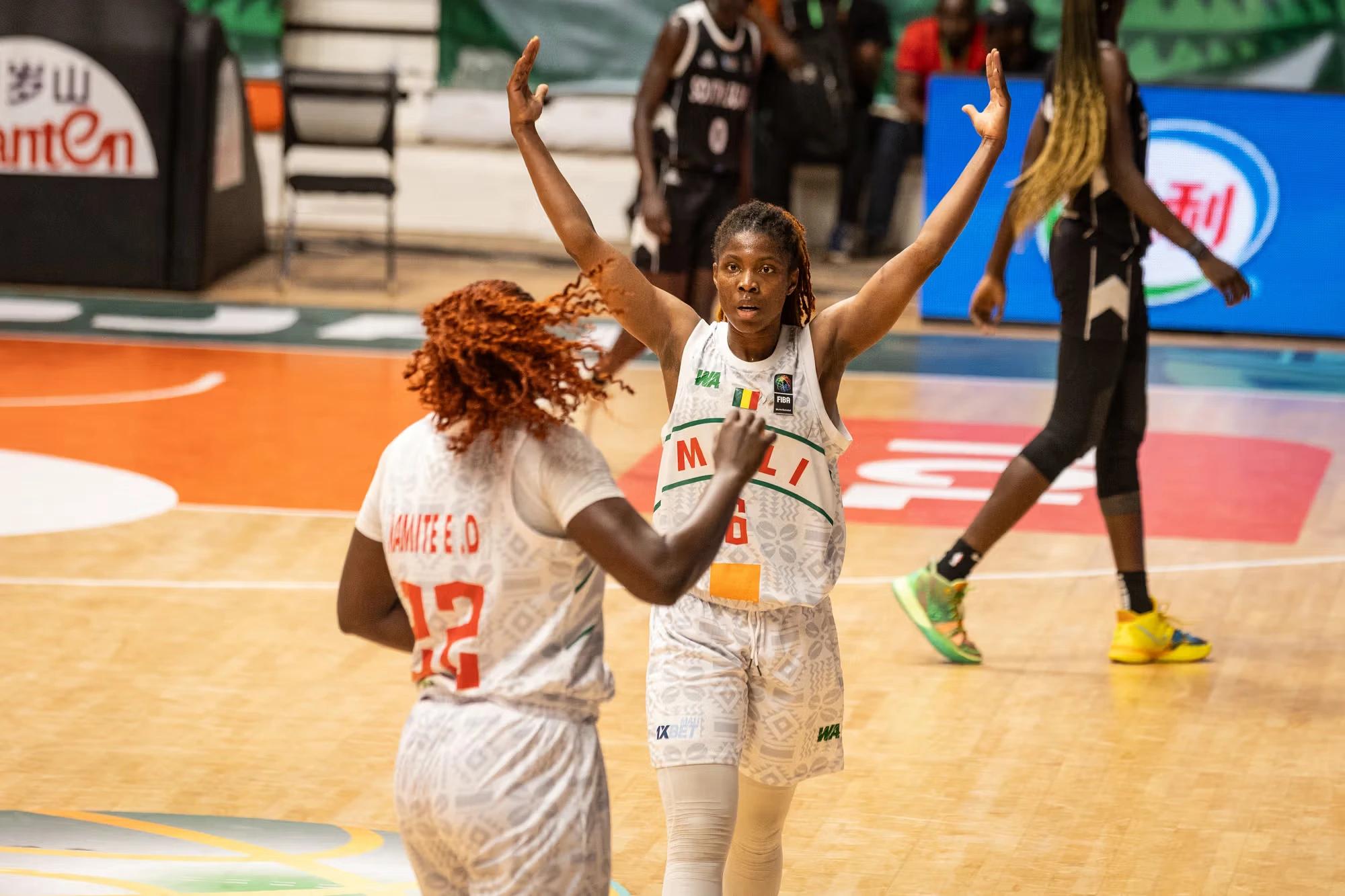
Mali secured their place in the Women's AfroBasket final with a dominant 76-50 victory over tournament debutants South Sudan, setting up a championship clash with defending champions Nigeria. The comprehensive win marked Mali's second triumph over South Sudan in the tournament and earned them another opportunity to claim continental glory after missing out on the title in 2023.
The West African nation's path to the final represents redemption following their disappointing 75-65 defeat to Senegal in the 2023 championship game, where they were forced to settle for bronze after defeating hosts Rwanda 89-51 in the third-place playoff. Mali's return to the final stage marks their third appearance in the title game since capturing their only Women's AfroBasket crown in 2007.
Related News: Nigeria defeats Senegal to reach fifth consecutive Women's AfroBasket final
Mali's championship drought has been a source of frustration given their recent final appearances. In 2009, they lost the opportunity to defend their title when they fell to 11-time champions Senegal in Madagascar, while their 2021 final ended in a 70-59 defeat to Nigeria as the latter secured their fifth overall title and third consecutive championship.
Under the guidance of coach Oumarou Sidiya, Mali will attempt to end their 18-year wait for continental supremacy. Victory would not only break Nigeria's current dominance and deny them a record fifth consecutive title but also secure automatic qualification for the 2026 FIBA Women's Basketball World Cup scheduled to take place in Berlin, Germany.
The achievement would be particularly significant given Mali's struggles to translate their junior-level success to senior competition. Despite dominating the Women's U16 and U18 AfroBasket tournaments, the senior team has consistently fallen short of expectations, making Sunday's final an acid test for their star-studded roster.
Mali established their authority from the opening tip-off, in stark contrast to their group stage encounter when South Sudan matched them stride for stride and came close to producing the tournament's first major upset. The Malians quickly opened a seven-point advantage after five minutes of play, leading 13-7, before completely overwhelming their opponents with a devastating first-quarter performance.
South Sudan found themselves facing a 29-8 deficit by the end of the opening quarter, with Mali's relentless pressure and superior execution creating an insurmountable gap. The West Africans maintained their intensity throughout the first half, establishing a commanding 31-point lead at the interval that effectively decided the contest's outcome.
The second half saw Mali manage their advantage professionally while giving valuable playing time to their entire roster. Coach Sidiya utilized his depth extensively, resting his key players for most of the final two quarters while maintaining the team's dominance on both ends of the court.
Mali's balanced offensive approach saw contributions from across their roster, with Sira Thienou leading the scoring with 14 points. Djeneba N'Diaye and Alima Dembele provided additional firepower with 13 and 11 points respectively, while Foune Sissoko, despite failing to score, led the team in assists with five and contributed defensively with a steal.
The statistical breakdown highlighted Mali's superiority in multiple areas, particularly on the boards where they out-rebounded South Sudan 54-38. Mali's offensive rebounding prowess was evident as they collected 18 second-chance opportunities, though South Sudan managed to limit the damage to a 10-9 advantage in second-chance points.
Mali's ball movement proved superior throughout the contest, recording 23 assists compared to South Sudan's eight, demonstrating their superior court vision and teamwork. The West Africans' three-point shooting created additional problems for their opponents, converting eight of 25 attempts while holding South Sudan to just three successful shots from 18 attempts beyond the arc.
Perhaps most impressively, Mali's bench players outscored their starters 42-34, showcasing the team's remarkable depth and preparation for the championship game. In contrast, South Sudan's reserves managed only 13 points, highlighting the disparity in squad strength between the two teams.
Despite the lopsided final score, South Sudan's tournament debut should be considered a success story. The East African nation entered as clear underdogs, having qualified through a wildcard after finishing third in the Zone Five qualifiers, yet they exceeded expectations by reaching the semifinal stage.
South Sudan's achievements extend beyond their on-court performance, as their semifinal appearance has secured them a spot in the 2026 Women's World Cup qualifiers and guaranteed their participation in the 2027 Women's AfroBasket tournament, assuming traditional qualification protocols remain unchanged.
Mali now faces the ultimate test against a Nigerian team that has not experienced defeat since October 2015, when they defeated Angola in a third-place playoff in Yaoundé. The defending champions are motivated by the opportunity to claim a record fifth consecutive title, having already matched Senegal's achievement of four straight championships with their 2023 triumph in Rwanda.
Following the victory, Mali guard Rokia Doumbia acknowledged South Sudan's tournament contribution while reflecting on her team's performance: "South Sudan did a great job in this competition. Reaching the Semis is not for everyone. We came out and played the way we should have the first game, we made shots and that was the difference. I must admit that opening match result was a wake up call for us. It's not that we were being complacent but we needed that reality."
Looking ahead to the final, Doumbia expressed confidence in Mali's approach: "Against Nigeria, we will control what we can. We will give them respect as champions but at the end of the day we will focus on our game. We will rest and come back ready to win. We came for that one goal. We have dominated the age group competitions and it is time to do the same with the Women's AfroBasket."
South Sudan shooting guard Sarah Deng took pride in her team's historic achievement despite the semifinal defeat: "We are a first time team ranked lower than any other team in the competition before coming here and we came out and competed. Mali are a good side, and while we did not have a good start against them, we are proud of what we have achieved."
South Sudan’s Adut Bulgak Reflects on Historic Semifinal Run
Despite the loss, South Sudan can walk away with heads held high. Adut Bulgak, one of their standout players, spoke candidly:
"You’ve got to give it to Mali. They were hitting all their shots, very in sync tonight… At the end of the day, the better team won."
She acknowledged the impact of the Malian fans in the arena and emphasized the importance of experience:
"I think we shot ourselves in the foot in the first quarter… but our girls fight. The experience of Mali showed tonight."
Still, South Sudan’s campaign isn’t over. They will now compete for bronze against Senegal in what could be their first international medal.
"We're still building, one brick at a time… South Sudan's men and women deserve to be at AfroBasket, and we're here to stay."
Nigeria vs Mali: AfroBasket 2025 Final Preview
Sunday’s final will see two West African giants collide. Nigeria, the defending champions and 11-time winners, and Mali, determined to reclaim continental glory after nearly two decades. The matchup promises to be a high-stakes showdown between the tournament’s most complete team (Nigeria) and the most explosive and balanced team (Mali).
When is the AfroBasket 2025 Final?
- Date: Sunday, August 3
- Venue: Palais des Sports, Abidjan, Côte d’Ivoire
- Matchup: Nigeria vs Mali

SportsLigue