
Meet the Coaches leading the AFCON 2025 Semi-Finalists
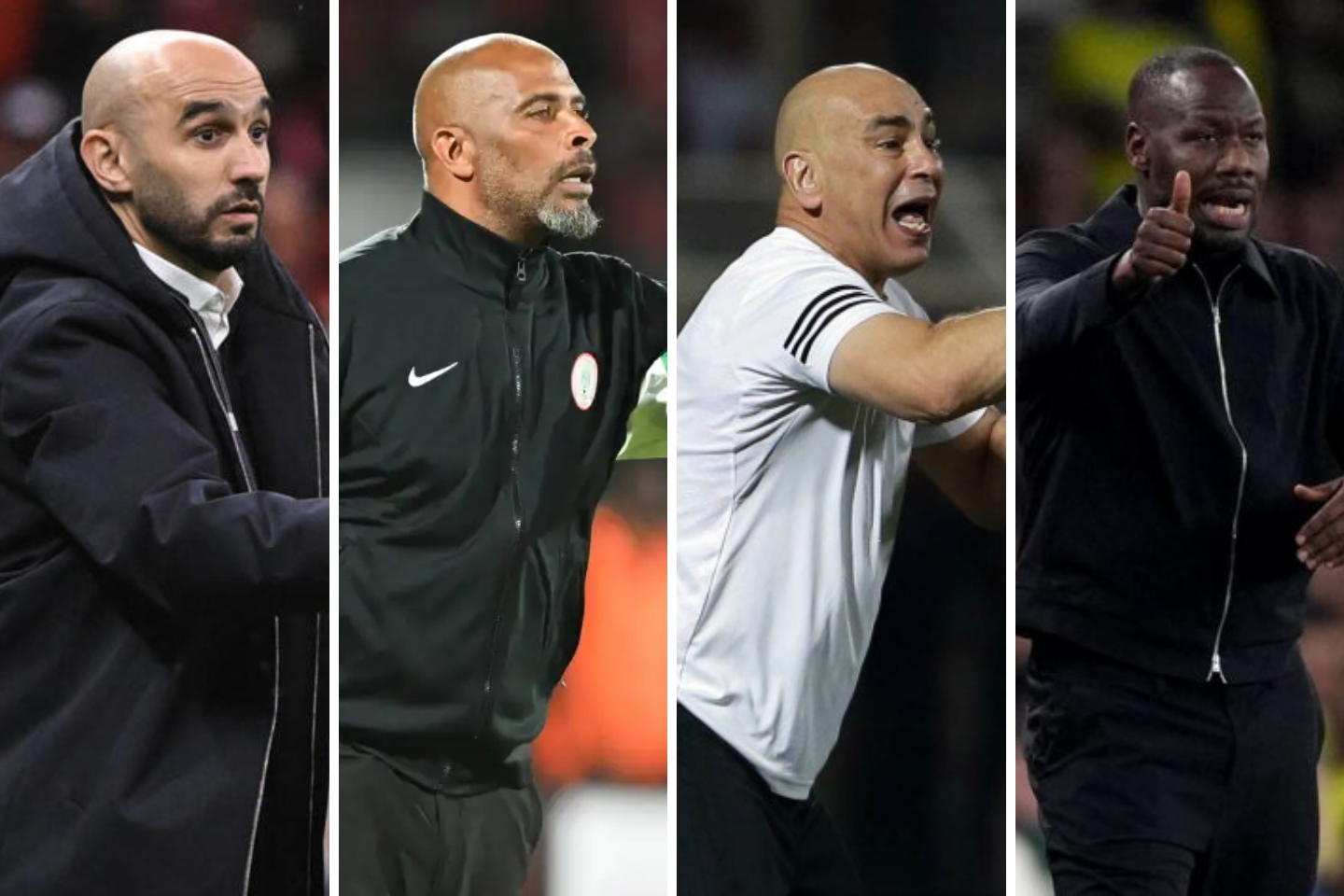
The Africa Cup of Nations in Morocco has reached its decisive stage, and beyond the goals and tactics, one powerful theme stands out. All four teams in the semi-finals are being led by coaches whose careers are deeply rooted in Africa.
Nigeria, Morocco, Egypt and Senegal have all resisted the temptation to rely on high-profile European names, instead placing their trust in men who understand African football culture, player mentality and the unique pressures of international competition on the continent.
Related Article: AFCON 2025 Semi-final: Nigeria vs Morocco – preview, head-to-head and how to watch
It is a quiet shift that reflects a growing belief that African coaches, whether home-grown or diaspora-trained, are best placed to guide national teams through AFCON’s intensity.
As Wednesday’s semi-finals approach, here is a closer look at the four men who now stand just two matches away from history.
Walid Regragui (Morocco)
The World Cup trailblazer chasing a home triumph
![[object Object]](https://cdn.sanity.io/images/5gkjmhor/production/7460090c82202b1c36f48208f8a6fe592d27a942-1024x576.jpg)
Walid Regragui
Walid Regragui already occupies a special place in African football history after guiding Morocco to the semi-finals of the 2022 FIFA World Cup, the best ever performance by an African team.
Now 50, the French-born former right-back has the chance to elevate his legacy further by winning the Africa Cup of Nations on home soil, something Morocco has not achieved since 1976.
Related Article: Morocco beat Cameroon 2–0 to reach AFCON 2025 Semifinals
As a player, Regragui earned 44 caps for the Atlas Lions between 2001 and 2009 and was part of the Moroccan side that lost the 2004 AFCON final. That personal disappointment continues to drive his coaching ambitions.
Most of his managerial experience has been built in Morocco. He spent six years at FUS Rabat before leading Wydad Casablanca to the CAF Champions League title, which earned him the national team job just months before the 2022 World Cup.
Despite some criticism at home about his team selections and tactical conservatism, Morocco’s consistent tournament performances under Regragui have strengthened his standing. Lifting the AFCON trophy in Rabat would silence any remaining doubts.
Eric Chelle (Nigeria)
A bold appointment seeking validation
![[object Object]](https://cdn.sanity.io/images/5gkjmhor/production/a6e493ec70563ad56120a4d94145f9aa939f4c4b-1920x1080.webp)
Eric Chelle
Eric Chelle’s journey to the Super Eagles bench has been unconventional. Born in Ivory Coast to a French father and Malian mother, he grew up in France and later represented Mali at international level.
Related Article: Nigeria beat Algeria 2–0 to reach AFCON 2025 Semi-Final against Morocco
His playing career as a centre-back was spent entirely in France, notably with Valenciennes and Lens. In coaching, he built his early reputation with Mali, guiding them from 2022 until their quarter-final exit at the last AFCON.
Nigeria’s decision to appoint him in January 2025 raised eyebrows. He failed to steer the Super Eagles to qualification for the 2026 World Cup, yet his tactical discipline and calm leadership have produced impressive results in Morocco.
At 48, Eric Chelle remains relatively young by international coaching standards. An AFCON title with Nigeria would instantly transform his reputation and make him one of the most talked-about coaches on the continent.
Pape Thiaw (Senegal)
The quiet builder of Senegal’s next era
![[object Object]](https://cdn.sanity.io/images/5gkjmhor/production/0807acef93baf3b0863062c86e872e2ff87f7f3e-768x511.jpg)
Pape Thiaw
Pape Thiaw is the youngest and least experienced coach left in the tournament, but he has already shown a knack for winning.
He first came to prominence by leading Senegal’s home-based side to the 2022 African Nations Championship title, a competition that often reveals the next generation of coaching talent.
Related Article: Senegal 1–0 Mali: Ndiaye sends Teranga Lions into AFCON Semi-Finals
Born in Dakar, Thiaw enjoyed a modest playing career across Europe, with spells in France, Switzerland, Spain and Russia. He also represented Senegal 16 times, scoring five goals and featuring in their famous 2002 World Cup run.
After a short but effective period with Niarry Tally in Senegal, Thiaw took charge of the CHAN team before being promoted to the senior side in December 2024, replacing Aliou Cissé.
Instead of opting for a high-profile foreign coach, Senegal backed continuity and local understanding. So far, that faith has been rewarded, with Thiaw guiding the team to AFCON’s final four and a place at this year’s World Cup.
Related Article: AFCON 2025 Semi-final: Egypt vs Senegal – preview, kickoff time, team news and how to watch
Hossam Hassan (Egypt)
A national icon chasing redemption
![[object Object]](https://cdn.sanity.io/images/5gkjmhor/production/7585697b28db7f372ceeb0473f324cf6fb7f8fbe-580x473.jpg)
Hossam Hassan
Few figures in African football command as much respect as Hossam Hassan. Across a remarkable 20-year international career, he earned 177 caps for Egypt, scored a record 69 goals and won three Africa Cup of Nations titles. His achievements at club level with Al Ahly and Zamalek made him a legend in Cairo.
Now 59, Hassan is seeking to write a second chapter of success as a coach. His managerial career has not matched the heights of his playing days, but this AFCON offers a golden chance to change that narrative.
Related Article: Egypt defeat Ivory Coast 3–2 to reach AFCON 2025 Semi-Finals
Having already led Egypt back to the World Cup, he now aims to add continental silverware to his coaching résumé. His twin brother Ibrahim serves as the team’s technical director, providing tactical support and balance to Hassan’s fiery personality.
With Mohamed Salah closing in on his national scoring record, Hassan hopes this tournament will celebrate both past and future Egyptian greatness.
A new era for African Coaches
AFCON 2025’s semi-finals tell a broader story. While European coaches remain part of the tournament landscape, African managers are increasingly trusted with the biggest jobs.
Whether it is Regragui’s World Cup pedigree, Chelle’s tactical rise, Thiaw’s quiet development or Hassan’s legendary status, each coach represents a different pathway to success.
By 18 January, one of them will be crowned champion of Africa. For all four, it would be more than a trophy. It would be proof that African football is now being shaped by those who know it best.
Chris John