
Pacers rediscover winning formula in Game 3 victory over Thunder
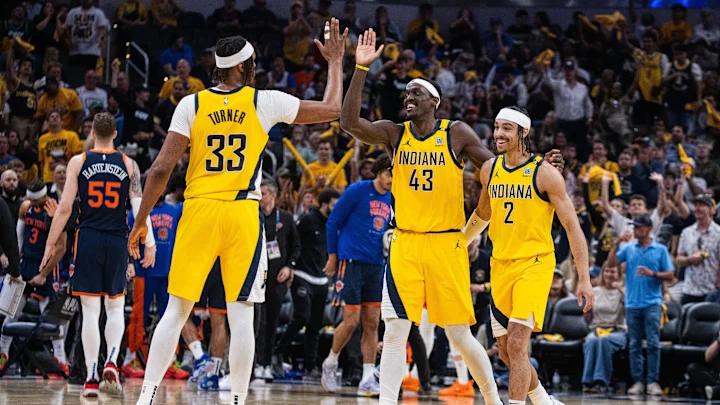
After a turbulent start to the NBA Finals, the Indiana Pacers finally looked like themselves again in a pivotal Game 3 win over the Oklahoma City Thunder, prevailing 116-107 to take a 2-1 series lead.
Despite their stunning comeback in Game 1, Indiana had strayed from its identity: fast-paced, high-IQ basketball with contributions from a deep bench and a disruptive defense. That all changed in Game 3.
Related News: The NBA Finals Journey of the Oklahoma City Thunder and Indiana Pacers
Back to Basics: Pace, Pressure, Patience
The Pacers reasserted their identity through a sharp increase in transition play, pushing the tempo off defensive rebounds and forcing turnovers. They ran in transition on 17.2% of their possessions—up from just 10.9% in Games 1 and 2—and scored a blistering 1.63 points per possession on those breaks. Tyrese Haliburton, back in form, orchestrated the attack with poise and purpose, tallying eight defensive rebounds to spark Indiana’s running game.
Unlike the rushed half-court sets of Game 2, Indiana showed greater patience in Game 3, allowing offensive sequences to develop. This shift nearly doubled their rim frequency from 16% to 31%, as they carved up OKC’s interior defense.
Bench Sparks: McConnell and Mathurin flip the script
T.J. McConnell was the tone-setter off the bench, injecting pace, defensive tenacity, and surgical penetration. His five steals in just 15 minutes—three off backcourt inbounds—disrupted the Thunder’s rhythm and helped flip an early eight-point deficit into a Pacers lead they never relinquished.
Bennedict Mathurin delivered a historic bench performance with 27 points on 9-of-12 shooting, tying Manu Ginobili and Jason Terry for the third-highest scoring output off the bench in Finals history. His poise and aggression allowed Haliburton to rest and forced OKC to assign top defender Alex Caruso to him late in the game.
Obi Toppin and Ben Sheppard also played key roles. Toppin’s energy yielded critical crunch-time plays, while Sheppard’s ball pressure on Shai Gilgeous-Alexander was vital, especially with Nembhard and Nesmith in foul trouble.
Defensive Revival
Indiana's defense came alive after the first quarter. Andrew Nembhard set the tone by face-guarding Gilgeous-Alexander for 94 feet, limiting his touches and forcing OKC to rely more on Jalen Williams. The results: Gilgeous-Alexander and Williams combined for 10 turnovers and just seven assists. OKC’s 19 total turnovers were their worst in the postseason.
Haliburton and Pascal Siakam also made major defensive contributions—Haliburton with smart rotations and active hands, and Siakam with crucial back-line help and perimeter switches. Even Myles Turner, ineffective early, came alive in the fourth quarter, anchoring the defense and neutralizing Chet Holmgren.
What it Means
This wasn’t just a win, it was a statement. The Pacers overcame subpar three-point shooting (9 makes), fewer free throws, and fewer offensive rebounds by returning to the formula that’s fueled their rise: ball control, transition offense, defensive pressure, and bench depth.
There’s still a long series ahead, and the Thunder will respond. But for now, Indiana has reminded everyone: they’re not just Finals participants—they're legitimate contenders.

SportsLigue