
Saudi Arabia’s Sky Stadium: The 46,000-Seat futuristic arena suspended above the desert
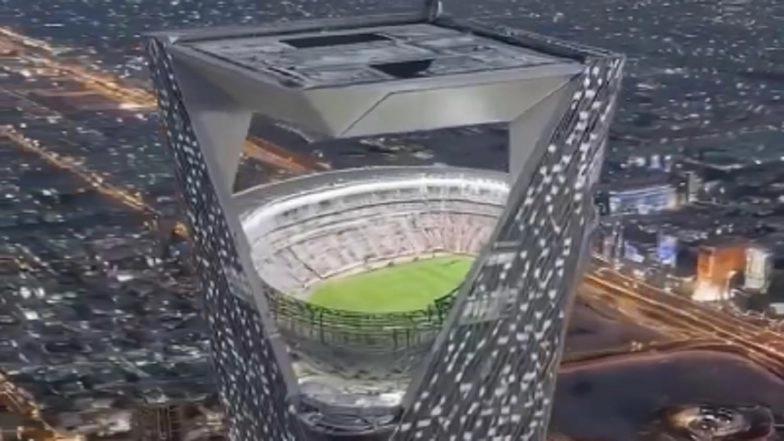
Saudi Arabia is once again pushing the limits of imagination and engineering with its latest sports mega project, a football stadium suspended 350 meters above the desert.
The proposed “Sky Stadium”, part of the $500 billion NEOM development, looks like something out of a sci-fi blockbuster. Designed to hold around 46,000 spectators, the futuristic venue will reportedly hover above The Line - the Kingdom’s linear, mirror-clad smart city that stretches through the northwest desert.
Related: Saudi Arabia officially launch sole bid to host the 2034 World Cup
Construction on the stadium is expected to begin in 2027 and finish by 2032, just in time for the 2034 FIFA World Cup, which Saudi Arabia officially secured hosting rights for in 2023.
A Stadium in the Sky
If completed as envisioned, the Sky Stadium would redefine what it means to attend a live match. Spectators won’t walk through traditional gates — they’ll arrive via high-speed elevators and autonomous transport pods that ascend hundreds of meters above the desert floor.
Related: What stadiums and host cities are in the FIFA Club World Cup 2025?
The stadium’s position atop one of NEOM’s vertical structures will make it one of the highest-altitude large arenas ever built. With panoramic desert views and cutting-edge architecture, it’s designed to offer a matchday experience unlike anything the sporting world has seen before.
According to reports, the stadium will feature advanced cooling systems, immersive LED displays, and smart connectivity for real-time interaction between fans, teams, and digital platforms.
Green Goals in the Sky
Beyond the spectacle, the Sky Stadium embodies Saudi Arabia’s drive toward sustainability. The entire structure is planned to be powered entirely by solar and wind energy, aligning with the Kingdom’s Vision 2030 goals of diversifying its economy and leading in renewable energy innovation.
Despite being a major oil producer, Saudi Arabia has poured billions into clean technology, renewable infrastructure, and eco-smart cities, and the Sky Stadium is designed to be a symbol of that balance between heritage and progress.
More Than Just a Stadium
Saudi Arabia’s sporting ambitions have become a cornerstone of its national transformation. From hosting heavyweight boxing bouts and Formula 1 races to the rapid rise of the Saudi Pro League, sport has become a cultural and political showcase of the country’s modernization efforts.
But the Sky Stadium might become the most striking symbol yet — a fusion of sport, architecture, and ambition. If built as planned, it will stand as a global landmark, drawing the attention of architects, environmentalists, and football fans worldwide.
Designed for the 2034 FIFA World Cup
Reports suggest the Sky Stadium will serve as one of the main venues for the 2034 FIFA World Cup, hosting matches up to the quarter-final stage. The design has been attributed to the Bjarke Ingels Group (BIG) — the same architectural firm behind some of the world’s most innovative modern structures.
With over 46,000 seats suspended in the sky, a self-sustaining energy system, and state-of-the-art fan technology, the Sky Stadium may set the new global benchmark for what a stadium can be — not just a venue, but an experience.
The Future Rises Above the Desert
Saudi Arabia’s Sky Stadium is more than an engineering challenge; it’s a statement. A declaration that the future of football — and perhaps of global sports — could be played not just on the ground, but in the sky.
If completed, the arena would not only rewrite the rulebook of stadium design but also reflect the Kingdom’s growing influence in the global sporting landscape — a vision that’s equal parts futuristic, ambitious, and symbolic of a new era for Saudi Arabia.

SportsLigue