
Swiss women saddle up for the Annual Cow Grand Prix in Flumserberg
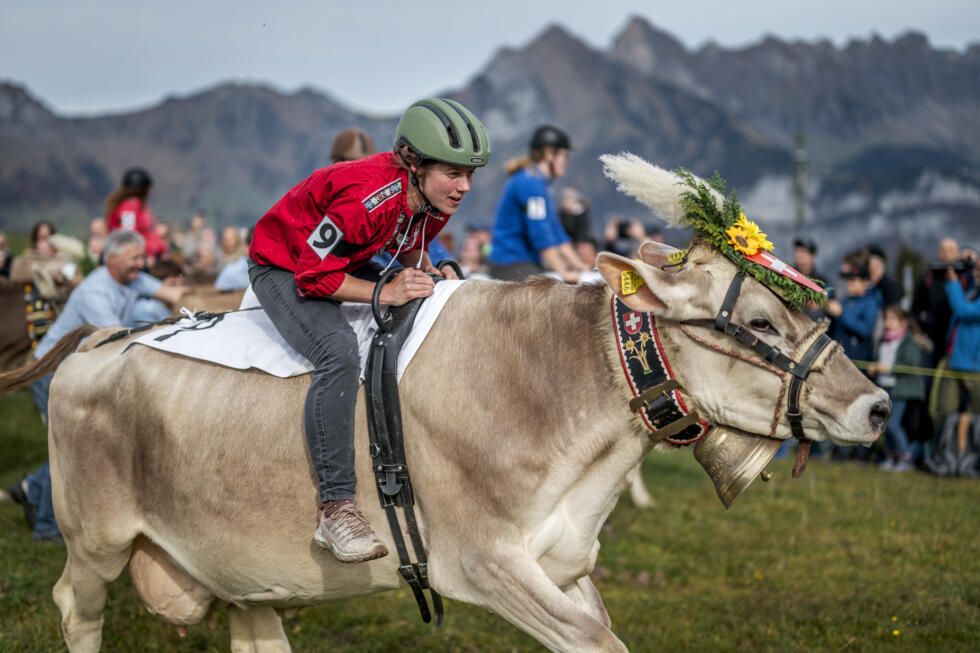
The sound of thundering hooves, clanging bells, and hearty laughter echoed through the Swiss Alps as nine cows charged down a grassy track in the village of Flumserberg, more than 1,300 meters above sea level. This wasn’t your average livestock show, it was the Swiss Cow Grand Prix, a beloved local tradition where only women take the reinsand race their cows for pride, prizes, and plenty of Alpine cheer.
Now in its 19th year, the event has become the highlight of Flumserberg’s autumn festivities, drawing thousands of spectators eager to watch cows with flower crowns gallop or sometimes meander around a circular, two-lap course marked by hay.
A Moo-ving Competition
The stakes? A 40-kilogram (88-pound) bag of feed, a traditional Alpine cowbell, a bouquet of flowers, and the eternal bragging rights that come with being crowned the fastest cow-and-rider duo in the Alps.
This year’s race once again belonged to Viola, the reigning champion, who stormed to victory on the inside track to defend her title. Her rider, Lea Werner, raised her fist in triumph as they crossed the finish line, grinning from ear to ear.
“The most important thing isn’t to win but to take part,” Werner said, proudly hoisting her victory cowbell to the roar of the crowd.
Her competitors included Nina Beeler, who raced on Cobra, an eight-year-old Swiss Brown. Despite a fast start, Cobra slowed on the second lap and finished at the back of the pack.
“It’s very different from riding a horse,” said Selena Gadient, one of Cobra’s trainers. “You can’t steer a cow; it’s completely unpredictable. You just hold on tight and hope she runs in the right direction.”
From Cheese Market to Alpine Spectacle
The quirky tradition began in 2006, originally as a fun side event to accompany the village’s annual cheese market.
“Some of the farmers’ wives suggested organizing a cow race,” recalled Remo Rupf, the event’s founder. “The men thought it would be too difficult, so the women trained in secret. That’s why only women are allowed to ride.”
Since then, the Cow Grand Prix has grown into a full-day celebration, complete with folk music, local cheese, and regional specialties, attracting up to 5,000 visitors to the scenic slopes overlooking Lake Walen.
Udderly Unpredictable
The race is part skill, part luck, and entirely unpredictable. As the bridles are released, some cows sprint off full tilt, while others slow to a trot or wander toward the cheering crowd.
Organizers insist the cows’ welfare comes first. Each animal participates voluntarily, and if one decides not to run, the race simply goes on without her. “If a cow doesn’t want to run, she doesn’t,” Rupf explained. “She just stops and stays where she is. We even get approval from the veterinary office every year, so everyone knows the animals are treated well.”
A Joyful Slice of Swiss Culture
The Cow Grand Prix has become a charming reflection of Alpine life, equal parts tradition, humor, and community spirit. The sight of flower-decked cows, proud riders, and cheering crowds against the mountain backdrop is pure Swiss magic.
And as the sun sets over Flumserberg and the cowbells fade into the hills, one thing is certain: in this corner of Switzerland, autumn belongs to the women, their cows, and a whole lot of joyful moo-mentum.

SportsLigue