
Trump signs Executive Order banning Transgender Athletes from Women’s Sports
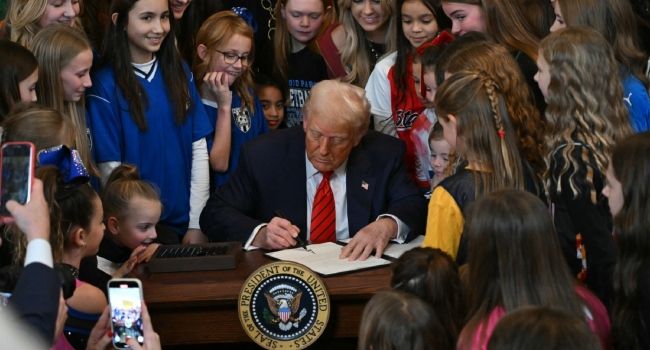
In a landmark policy shift, President Donald Trump has signed an executive order banning transgender athletes from participating in girls’ and women’s sports at federally funded institutions.
The order, titled “Keeping Men Out of Women’s Sports,” mandates that Title IX, the federal law prohibiting sex-based discrimination in education, be enforced strictly based on biological sex assigned at birth. This move aligns with Trump’s long-standing stance on gender and sports, a topic that has been at the center of debate in recent years.
What does Trump’s executive order mean for transgender athletes?
Federal Funding and Compliance
The Department of Education will now require all federally funded schools and athletic organizations to prohibit transgender athletes from competing in female categories. Institutions that fail to comply risk losing federal funding and may face additional legal repercussions.
NCAA and Professional Sports Impact
While the executive order directly applies to schools and colleges receiving federal funds, it also puts pressure on sports governing bodies such as the NCAA, professional leagues, and Olympic committees to align with the federal stance.
NCAA President Charlie Baker has acknowledged the order and stated that the organization will review its policies to determine compliance.
Will the IOC change transgender athlete rules before the 2028 Olympics?
The International Olympic Committee (IOC), which has left decisions on transgender participation to individual sports federations, may now face diplomatic and political pressure to revise its stance ahead of the 2028 Los Angeles Olympics.
Enforcement and Visa Restrictions
In addition to domestic regulations, Trump has directed Secretary of State Marco Rubio to ensure that foreign transgender athletes seeking to compete in the U.S. face potential visa restrictions. Director of Homeland Security Kristi Noem has been instructed to deny visas to individuals attempting to enter the U.S. under policies that allow transgender participation in women’s sports.
Public and Political Reactions
The executive order has sparked intense debate across the sports and political spectrum. Supporters argue the decision protects the integrity of women’s sports, ensuring fair competition by maintaining separate categories for biological females. Former collegiate swimmer Riley Gaines and other advocates have praised the move as a victory for women’s rights in athletics.
Opponents, including civil rights organizations such as the National Women’s Law Center (NWLC) and GLAAD, have condemned the order as discriminatory. They argue that transgender athletes deserve equal opportunities and that this policy undermines inclusivity in sports.
Legal Challenges and Future Implications
The executive order is expected to face legal battles, with advocacy groups preparing to challenge its constitutionality. The primary legal questions include:
Does the order violate federal anti-discrimination laws?
Can the federal government enforce policies on independent sports organizations like the NCAA? Will courts uphold the redefinition of Title IX in this context?
This executive action continues Trump’s broader policy approach to transgender rights, including previous decisions on gender-affirming healthcare, military service, and education policies. With legal battles and political discourse heating up, the long-term impact of this order on women’s sports, NCAA regulations, and international athletics remains to be seen.
Tags

SportsLigue