
Why African arm wrestling is rapidly rising on the global stage
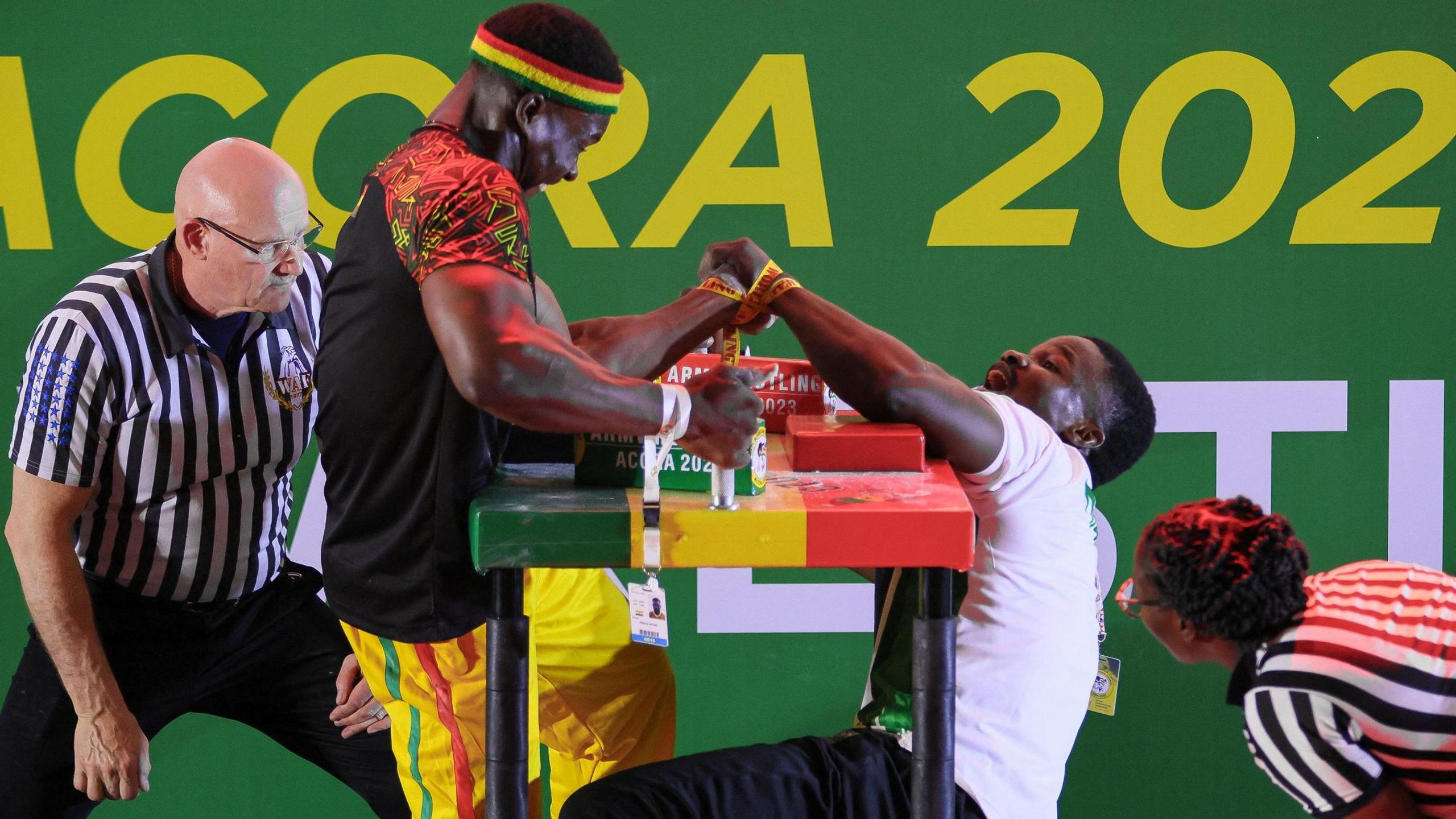
Arm wrestling — that age-old test of strength and willpower — is enjoying a resurgence across Africa, turning from a traditional pastime into a professional sport with international recognition. Once seen as just a casual contest to settle playground arguments or community rivalries, the sport is now flexing its muscles on the continental stage — and Africa is leading the charge.
From Ancient Contests to Global Competition
While the Canadian city of Wetaskiwin hosted the first official World Armwrestling Federation (WAF) World Championship in 1979 and could stake a claim to the sport’s formal roots, the practice of arm wrestling dates back much further. Anthropologists have documented similar contests in Japan, Spain, and Cuba before the 20th century, and some even suggest that versions of the sport are depicted in ancient Egyptian hieroglyphs, although this is still debated.
Regardless of its historical roots, what’s clear is that arm wrestling is finding new life in Africa — not through nostalgia, but through ambition.
Arm Wrestling's Breakthrough at the African Games
March 2024 marked a defining moment as arm wrestling made its debut at the 13th African Games in Accra, Ghana. This monumental inclusion was championed by Charles Osei Asibey, President of the Armwrestling Federation of Africa (AFA), who had promised to elevate the sport to household status on the continent after his 2022 election.
“Arm wrestling was once just a way to prove who was strongest in school or the village,” said Asibey. “We’ve now turned it into a serious sport.”
That mission took a giant leap forward in Accra, where the Ghanaian team capitalized on their home advantage. Ghana bagged 41 of the 84 medals on offer, including eight golds, although Egypt ultimately topped the medal table thanks to a higher number of first-place finishes.
Technique over Muscle: The Science of the Sport
Contrary to popular belief, raw strength alone doesn’t make an arm wrestling champion. The sport is highly technical, and elite arm wrestlers — known as “pullers” — undergo rigorous training that emphasizes full-body conditioning and strategic execution.
“A lightweight who is smart, fast, and technically sound can beat a heavier opponent,” explained Asibey, himself a former competitor.
Pullers compete in weight and gender classes, similar to boxing and MMA, and employ distinct fighting styles. The toproll style involves wrist pronation and leaning back to create leverage, often favored by taller athletes. Meanwhile, the hook style relies on wrist supination and tricep power, making it effective for competitors with strength training backgrounds.
Styles aside, sportsmanship is a core value. “Even in defeat, you congratulate your opponent,” Asibey emphasized. “You shake hands before and after every match.”
Ghana's "Golden Arms" shine on the Continental Stage
The sport’s African Games debut was more than a milestone — it was a homecoming for Asibey, who founded the Ghana Armwrestling Federation in 2016. It was also a breakout moment for two standout Ghanaian pullers.
Men’s captain Edward Asamoah swept both the left and right arm contests in the 90kg category. A member of the Ghana Immigration Service, Asamoah entered his first competition in 2017 and has never looked back.
“The road’s been tough with injuries and financial struggles, but I stayed focused,” he told CNN. “Hard work and determination made those medals possible.”
Equally dominant was police officer Grace Minta, who not only clinched two golds in Accra but also made history as the first Ghanaian to win gold at the World Armwrestling Championships in Moldova just months later. A former javelin and shotput athlete, Minta began arm wrestling in 2017 and has since become a three-time African Champion.
“I’m incredibly proud to represent Ghana,” Minta said. “I want to help train the next generation and build a future for this sport.”
Facing Global Heavyweights: The Road Ahead
Despite these achievements, African nations face a tough challenge on the global stage. At the 2023 World Championships, Kazakhstan dominated with 52 golds and a total of 159 medals. Turkey and Georgia followed closely. Egypt led Africa’s showing in 36th place, with Ghana finishing two spots behind.
A key difference, says Asibey, is the scale of participation. Nations like Kazakhstan, where the sport is embedded in school curriculums, can afford to send over 100 competitors to global tournaments.
“They dominate because they’ve invested heavily in the sport,” he explained. “In Africa, we’re just starting to get recognition. The African Games helped, but we still lack sponsors and funding.”
Still, Asibey remains hopeful. “We believe that multinationals and corporate sponsors will soon recognize our progress and potential.”
Olympic Ambitions: From Accra to Los Angeles
While WAF’s bid to include para-arm wrestling in the 2028 Paralympics in Los Angeles was unsuccessful, Asibey — now one of five vice-presidents at WAF — believes Olympic inclusion is inevitable.
He is already eyeing arm wrestling’s return at the 2027 African Games in Cairo and is doubling down on his efforts to elevate the sport continentally as a stepping stone to the Olympic Games.
Tags

SportsLigue