
Winter Olympics 2026: Team USA seizes early advantage in Figure Skating
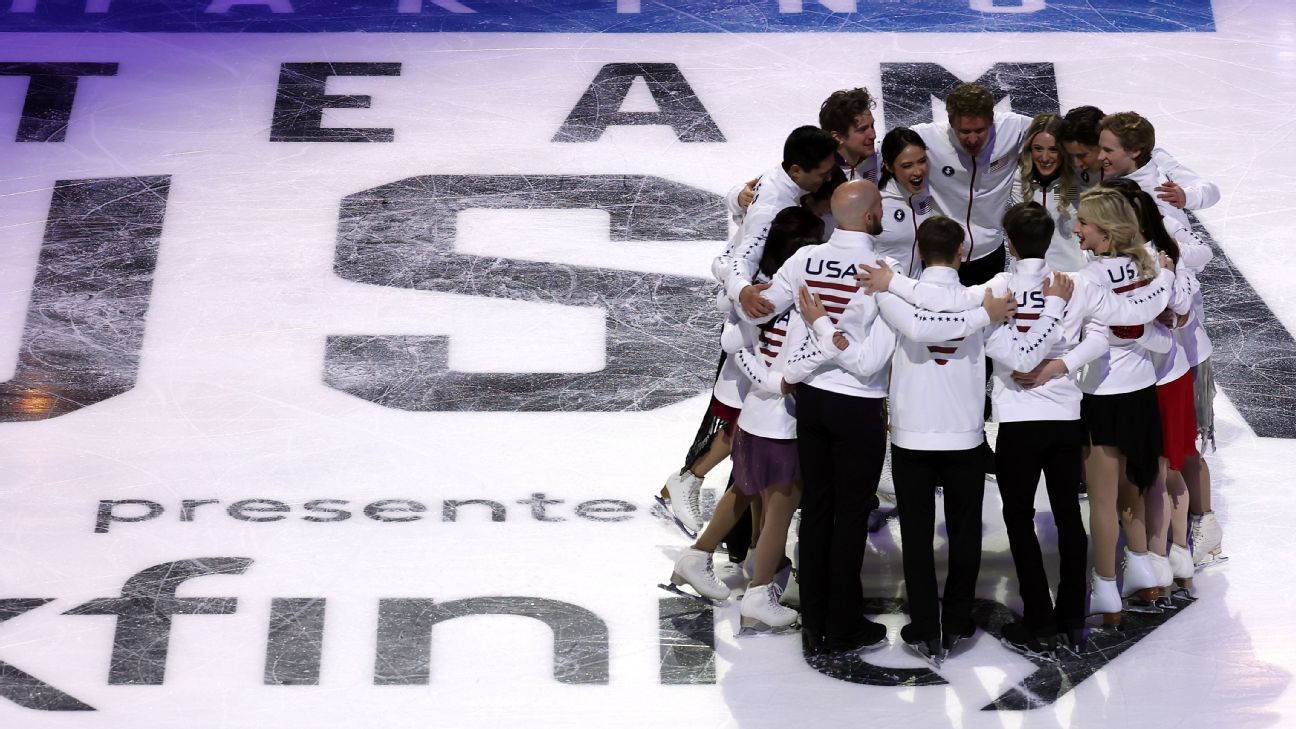
Team USA opened its title defence at the Milano Cortina 2026 Winter Olympics in emphatic fashion, delivering a composed and confident performance across the opening three segments of the figure skating team event to establish an early lead.
Led by the experience and flair of ice dancers Madison Chock and Evan Bates, and capped by a poised skate from women’s singles star Alysa Liu, the Americans sit two points clear at the top of the standings after the first day of competition.
The early advantage places the United States firmly on course to repeat as Olympic champions in the team event, with Japan emerging as their closest challengers heading into Saturday’s decisive segments.
Chock and Bates set the tone in Ice Dance
The opening rhythm dance segment offered Team USA the chance to deploy its most seasoned pairing, and Chock and Bates embraced the responsibility. With nine Olympic appearances between them, the three-time world champions skated with authority and freedom, setting the benchmark for the entire field.
Performing to a high-energy medley of Lenny Kravitz tracks, the duo delivered the top routine of the segment, earning a score of 91.06. The mark not only secured the maximum 10 points for the United States but also represented one of the strongest rhythm dance scores in Olympic history.
Breaking the 90-point barrier at an Olympic Games underscored their dominance and immediately applied pressure on rival teams, particularly France and Japan, both expected to be medal contenders.
The result carried added emotional weight. Chock and Bates were part of the U.S. squad that finished second at Beijing 2022 behind the Russian team, only for medals to be withheld for years due to the Kamila Valieva doping case. Their eventual gold medal presentation in Paris in 2024 closed that chapter — and Friday’s skate felt like a fresh Olympic beginning.
Pairs Skate holds firm under pressure
The spotlight then shifted to the pairs competition, where Ellie Kam and Danny O’Shea carried significant responsibility. With medal-level strength elsewhere in the American lineup, their task was clear: minimise damage and keep Team USA competitive.
A fall by Kam on a triple loop midway through their program disrupted momentum, but the pair recovered well to finish their skate to Hallelujah with composure. Their score of 66.59 placed them fifth in the segment, enough to preserve the overall U.S. lead.
While Italy, Canada and Georgia closed the gap, the Americans remained on top after the pairs event, demonstrating the depth and resilience that has defined their team strategy.
Alysa Liu delivers a calm and commanding finish
World champion Alysa Liu closed out the opening day with a polished women’s short program that reinforced her status as one of the premier skaters of the Games. Skating to Laufey’s Promise, Liu combined technical precision with expressive control, drawing a strong reaction from the crowd.
Her score of 74.90 ensured the United States finished the day in first place, maintaining a narrow but valuable two-point cushion over Japan heading into Saturday’s competition.
Liu’s ability to handle pressure in a team setting adds another layer to her individual medal prospects later in the Games, while giving the U.S. a dependable anchor in the women’s discipline.
Tactical decisions ahead for Team USA
With the team event unfolding rapidly, American officials confirmed that Ilia Malinin will skate the men’s short program. Widely regarded as the favourite for individual men’s gold, Malinin’s involvement highlights the delicate balancing act teams face between maximising team points and preserving skaters for individual events.
Under Olympic rules, teams may substitute up to two athletes between segments — a strategic option the U.S. could revisit depending on results and scheduling.
Medal Race taking shape
After three segments, the standings suggest a familiar rivalry is emerging. Japan remains firmly in contention, while France’s ice dance strength and Italy’s consistency keep them within striking distance.
With five teams advancing to the free skate portion, every point gained in the short programs carries outsized importance. Team USA’s opening-day execution, particularly in ice dance and women’s singles, has given them a critical edge as the competition intensifies.
As the men’s short program and ice dance free dance await, the Americans have positioned themselves exactly where reigning champions want to be, in control, but with no margin for complacency.

SportsLigue