Italy crash out again as Bosnia stun Azzurri to seal World Cup 2026 spot
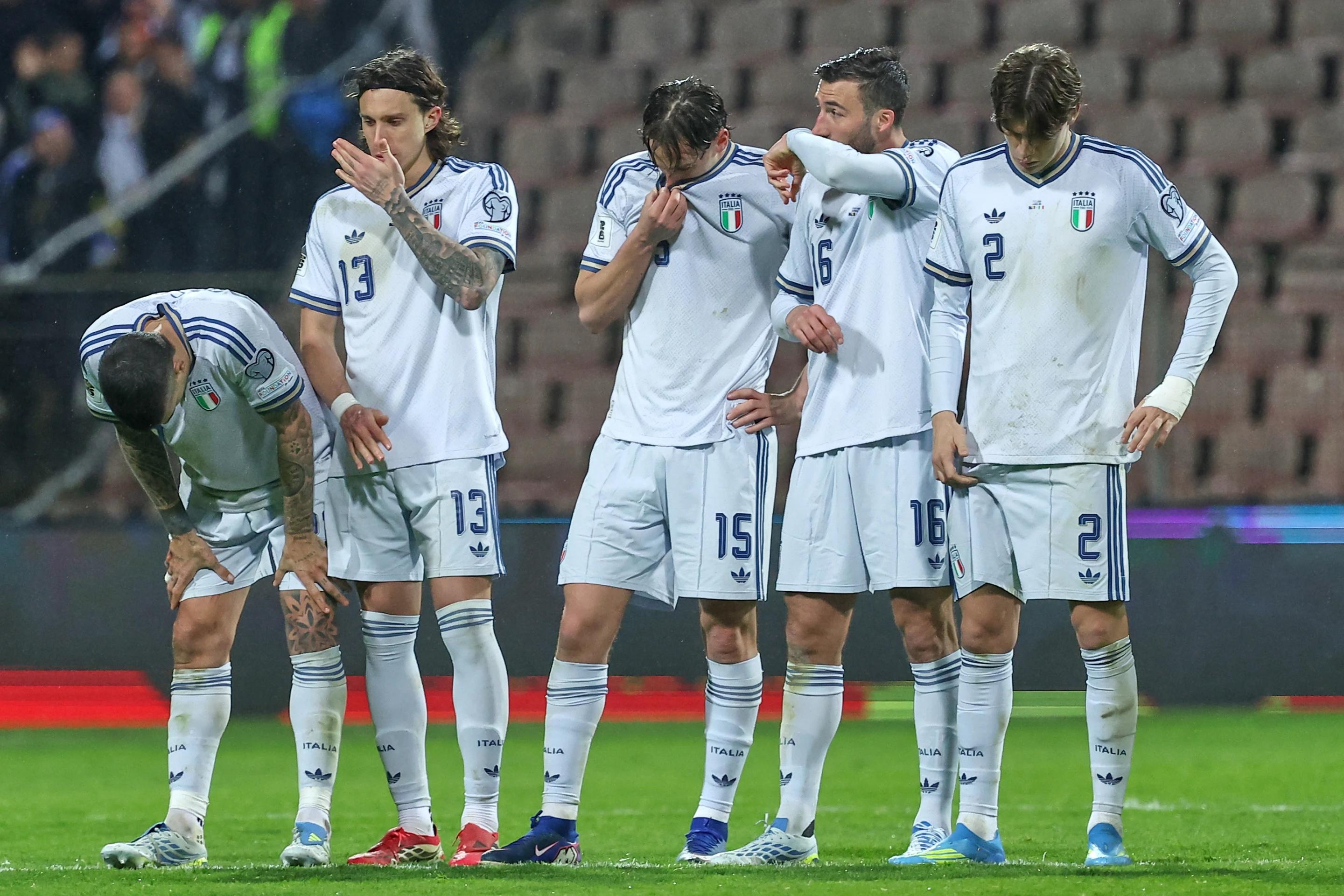
Italy’s decline on the global stage reached a new low on Tuesday night, as the four-time world champions were eliminated from World Cup qualification for the third consecutive time following a dramatic playoff defeat to Bosnia and Herzegovina.
In a result that will send shockwaves across international football, Italy fell 4–1 on penalties after a tense 1–1 draw in Zenica, confirming their absence from the 2026 FIFA World Cup. For a nation that once defined footballing excellence, the latest setback deepens what is now widely seen as a systemic crisis.
From Early Control to Collapse
Italy started brightly, with Moise Kean giving the visitors an early lead and momentarily settling nerves. However, the game turned before halftime when defender Alessandro Bastoni was shown a straight red card, forcing the Azzurri to play the remainder of the match with ten men.
Bosnia capitalised on the numerical advantage late in the game, as substitute Haris Tabaković struck in the 79th minute to level proceedings and push the contest into extra time.
Despite holding on through added periods, Italy faltered when it mattered most. Missed penalties from Pio Esposito and Bryan Cristante handed the initiative to the hosts, and U.S.-born Esmir Bajraktarević calmly converted the decisive spot-kick to send Bosnia to the World Cup.
A Historic Fall for a Football Giant
Italy’s failure marks a remarkable fall from grace. Winners of the World Cup in 1934, 1938, 1982 and 2006, the Azzurri will now go at least 16 years without featuring at the tournament.
Their struggles are no longer isolated incidents. After group-stage exits in 2010 and 2014, Italy failed to qualify for the 2018 and 2022 editions, losing playoff ties to Sweden and North Macedonia respectively. This latest defeat extends a troubling pattern that raises serious questions about the country’s football structure.
Head coach Gennaro Gattuso did not shy away from the reality of the situation. “Italy has failed to qualify for three World Cups. We’re having a tough time achieving our goals,” he admitted after the match.
Italian FA president Gabriele Gravina was even more direct, describing the situation as a “huge crisis.”
A Generation without a World Cup
Perhaps the most striking consequence of Italy’s absence is its impact on an entire generation of fans and players. No current member of the squad has experienced a World Cup finals. For younger supporters, Italy’s last appearance in 2014, remembered for Luis Suárez’s infamous incident involving Giorgio Chiellini, remains a distant memory.
The emotional weight of the defeat was evident among the players. “It’s upsetting for everyone — for us, our families, and the kids who have never seen Italy at a World Cup,” said Leonardo Spinazzola.
Mismatch on Paper, Reality on the Pitch
On paper, Italy’s elimination defies logic. Ranked significantly higher, with a vastly larger population and superior player resources, the Azzurri were overwhelming favourites.
Yet Bosnia’s discipline, resilience, and home support proved decisive. The result underlines a broader trend in international football, where tactical organisation and belief increasingly close the gap between traditional powers and emerging teams.
For Bosnia, qualification marks a historic achievement — only their second-ever World Cup appearance and first since 2014.
Elsewhere in Europe: Sweden, Turkey and Czech Republic advance
Italy were not alone in the drama of playoff finals across Europe. Sweden secured qualification with a 3–2 victory over Poland, thanks to a late winner from Viktor Gyökeres, continuing his standout form in the qualifiers.
Turkey edged Kosovo 1–0 to book their return to the global stage, while the Czech Republic overcame Denmark in a penalty shootout to secure their first World Cup berth since 2006.
What next for Italy?
Attention will now turn to the future of Italian football, from grassroots development to tactical identity and leadership at the highest level.
Gattuso, who only recently took charge, faces uncertainty, but the issues appear to run deeper than any single coach. Italy’s domestic league competitiveness, youth development pathways, and evolving tactical trends will all come under scrutiny.
For now, one reality stands above all: one of football’s most decorated nations will once again watch the World Cup from home.

SportsLigue